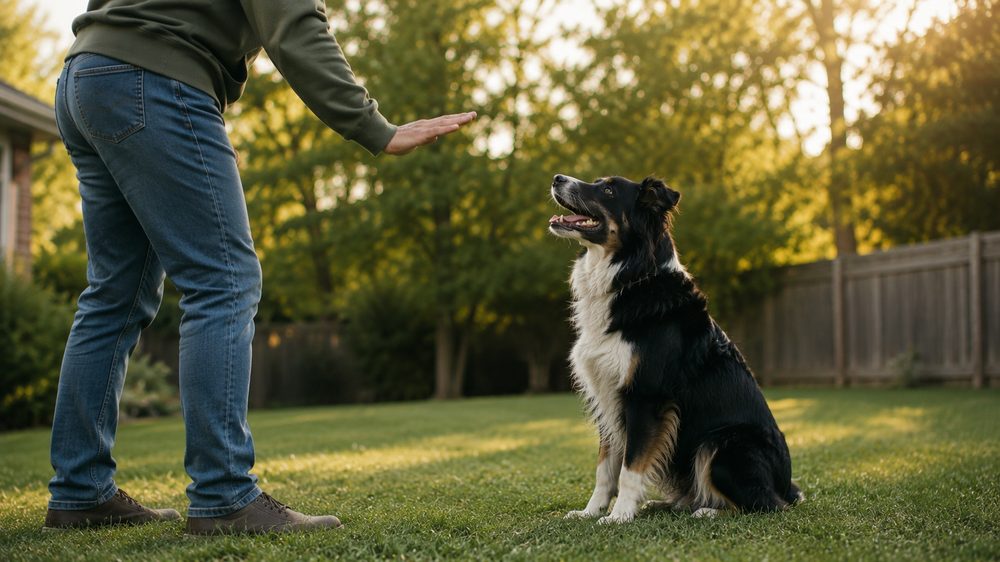
You know the drill. Someone knocks. You reach for the handle. And suddenly your dog is a furry missile aimed directly at the street.
Door dashing is one of those things that feels like a manners problem but is actually a safety problem. A dog that shoots the gap between you and the frame isn't being defiant. He's being a dog. The door opens, interesting things happen, and no one has ever taught him that the threshold is the one place he doesn't get to make decisions on his own.
The good news is that door manners are trainable. The better news is that the training is simpler than you think.
Why dogs bolt out the front door
Before you can fix it, it helps to understand what's driving it.
For most dogs, the front door is the most exciting spot in the house. The leash lives near it. Walks start at it. Visitors arrive through it. The mail carrier, the delivery driver, the neighbor's kid on a bike: all of it happens at that door. Your dog has learned that the door opening predicts something good, and he wants in on it immediately.
That's not stubbornness. That's a dog with decent pattern recognition and zero impulse control around the thing he cares about most.
Puppies and young dogs are especially prone to it because impulse control is a skill that has to be built, and they haven't built it yet. But plenty of adult dogs door dash too, especially if the habit has been reinforced by months or years of getting away with it.
The risks are real. A dog loose on the street can be hit by a car, get lost, start a fight with another dog, or scare a child. This isn't meant to alarm you. It's just why this is worth spending actual training time on, not just hoping for the best.
Why the usual fix makes it worse
Most people's instinct is to grab for the collar the moment the door opens. Understandable. But here's what your dog experiences: the door opens, something exciting happens, and then you reach fast and grab him. That grab can add to the arousal around the door, or teach a dog to dodge your hand on the way past.
Lunging at a bolting dog teaches him to be faster next time. It doesn't teach him to wait.
What actually works is building a default behavior at the threshold, one where the door itself becomes the signal. It opens when the dog holds. It closes when the dog moves. The dog learns that patience is the thing that makes interesting stuff happen.
Build a default sit or wait at the threshold
This is the core skill. You're teaching your dog that the front door is a place where he stops and waits until you release him.
Start with the door closed
Ask your dog to sit near the door. Reward him with a treat for sitting. Now reach for the handle. If he stays sitting, mark it (with a "yes" or a clicker) and reward. If he gets up, calmly take your hand off the handle and wait. No drama, no repeated commands. Just remove the opportunity.
The door is the marker. It moves toward opening when he holds. It stops when he doesn't.
Open it inch by inch
Gradually increase how far you open the door before you reward. Inch by inch, literally. A dog that can hold a sit while the door swings fully open is several training sessions away from where you start. That's fine.
Add the release word
Once he's solid with the door opening, add the release. Pick a word ("free" works well) and use it every single time you invite him through. That word becomes the green light. Everything else means hold.
Proof it against the real world
A sit in a quiet moment is the starting point, not the end goal. Door dashing happens during deliveries, when kids run in from the backyard, when guests arrive. You have to train against those triggers too.
- Add the doorbell. Ring it yourself, or have someone else ring it, while you work the same open and close exercise. This is where most dogs fall apart at first, and that's exactly why you practice it.
- Add distraction outside. Train when a neighbor is walking by. Train when there's noise on the street. Gradually make the picture harder.
- Add the leash coming off the hook. For dogs who rocket at the sight of the leash, practice picking it up and setting it back down while asking for the wait. The leash stops predicting instant outside access.
Manage the setup while you train
Training takes weeks. Life happens every day. You need a management plan that keeps your dog safe while the new habit is being built.
- Use a second barrier. A baby gate or exercise pen positioned behind the front door gives you a buffer zone. The door opens, but your dog can't reach the threshold. This is especially important in households with kids who forget to watch the gap, or with frequent visitors who don't know to be careful.
- Put a long line on during sessions. A long line attached to your dog's collar or harness gives you a way to interrupt a bolt without chasing. Chasing is the worst possible response to a dog who gets out, because most dogs read it as the best game of their lives. More on that in a moment.
- Keep the leash in the same spot every time. Consistency in where equipment lives reduces the chaos at departure.
- Post a note for visitors. If your household has regular visitors or a busy delivery schedule, a sign on the door asking people to knock and wait before opening it is simple, and it works.
If your dog does get out
It happens, even to careful owners. Here is what to do.
Do not chase. A dog you're running toward will run away from you, because that's how dogs play. Instead, run the other way. Away from the dog. Make noise, act ridiculous, drop to the ground. Anything that reads as interesting rather than threatening.
Call his name once in a happy voice, then go quiet. Repeated calling in a panicked voice usually makes a dog less likely to come back, not more.
If you have a solid recall, now is when it pays off. If you don't have one yet, that's the next thing to work on.
Keep a treat pouch or a bag of high-value food near the door during the training period. If your dog gets out, that bag goes with you.
The bottom line
A dog that bolts the front door isn't broken. He's excited, undertrained for this specific moment, and running on a habit that's been building since the day you brought him home.
The fix is clear. Build the wait. Use the door as the marker. Proof it against the real triggers. Manage the environment while the training catches up.
It takes consistency over a few weeks, not perfection forever. Most dogs get it faster than their owners expect.
Start with one session today. Door closed, hand on the handle, wait for the sit. You've got this. 🐾