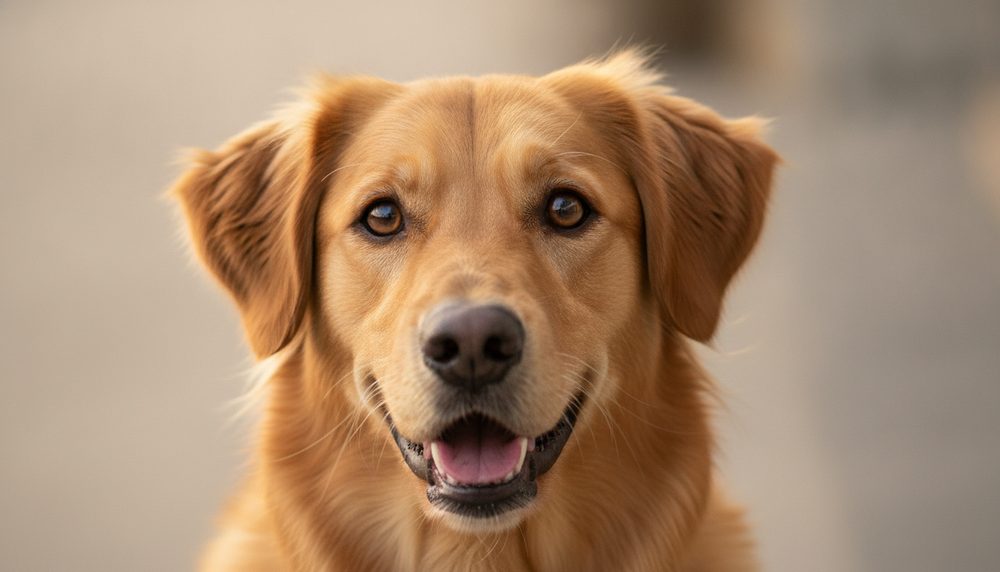
You live with this dog. You feed them, walk them, know their favorite spot on the couch. And yet there's a solid chance you're misreading half of what they're telling you.
That's not a criticism. It's just the reality of cross-species communication. Dogs are incredibly expressive animals, but they speak in posture and muscle tension and micro-signals most of us were never taught to notice. Learning to read those signals properly is one of the most practical things you can do as a dog owner. It prevents problems before they escalate, builds genuine trust, and honestly makes the whole relationship more interesting.
Here's what to look for.
The Tail Wag Is Not as Simple as It Looks
Most people treat a wagging tail as a green light. Sometimes it is. Sometimes it absolutely isn't.
A loose, wide, full-body wag where the whole back end swings along? That's a happy dog. A stiff, slow, high wag with the rest of the body tense? That's a dog on high alert, possibly uncomfortable, and worth giving space to.
Position matters too. A tail held high signals arousal or confidence. Tucked between the legs signals fear or submission. A tail at mid-height held loosely is usually a relaxed dog just doing their thing.
The key thing to watch is whether the wag matches the rest of the body. A tail can wag while a dog is deeply uncomfortable. Always read the whole picture.
Ears, Eyes, and the Mouth That Speaks Volumes
Ears forward and alert means your dog is interested and engaged. Ears pinned flat to the head usually means fear, stress, or submission. Relaxed ears that sit naturally for that breed are a good sign.
Eyes are where things get really interesting.
Soft eyes, slightly squinted, blinking normally - that's a relaxed and happy dog. Hard, unblinking, wide eyes mean something has their full, serious attention. And then there's whale eye: when a dog turns their head but keeps watching you, showing the white of their eye in a crescent shape. That's a stress signal. If you see whale eye, the dog is uncomfortable and needs breathing room.
Direct, sustained eye contact from an unfamiliar dog is worth paying attention to. In dog language, a hard stare is often a warning, not an invitation.
The mouth tells a story too. A loose, slightly open mouth with a relaxed jaw is a content dog. A closed, tight mouth in a tense situation is a dog that's bracing. A lip lick or yawn when nothing in the environment explains it? That's a calming signal.
What Are Calming Signals?
Dogs use a set of behaviors to try to defuse tension - both in themselves and in the dogs or people around them. These are sometimes called calming signals, and they're easy to miss because they look ordinary.
Yawning when not tired. Lip licking with no food present. Turning the head or body away. Sniffing the ground suddenly when nothing interesting is there. Moving in a curved arc rather than straight toward something.
These signals show up when a dog is anxious, overwhelmed, or trying to communicate that they mean no harm. When you see them clustered together, your dog is telling you something is too much.
The Play Bow and the Happy Dog in Full Swing
Not all signals are about stress. Dogs are enthusiastic communicators when things are good, too.
The play bow is one of the most obvious. Front end down, bottom in the air, tail going. It's a clear, unambiguous invitation to play. Dogs use it with each other and with people. If your dog does this at you, congratulations - you've been asked to play.
Loose wiggly body, bouncy movement, soft face, that open relaxed mouth with what looks like a grin. A dog doing the zoomies for the sheer joy of it. These are all signs of a dog who's feeling safe and happy.
The Warning Stack: What Happens Before a Bite
This is the part that matters most for safety, and it's the part most people miss because each step looks minor on its own.
Dogs almost never bite without warning. What happens is that humans miss the warnings.
The progression typically goes something like this: the dog freezes or goes very still, then a hard stare, then a closed mouth and tense jaw, then a lip curl or wrinkle at the nose, then a low growl, then a snap (usually with no contact), then a bite.
Here's the critical bit. If a dog gets punished for growling, they learn to skip that step. They go from tense to biting because the middle warning was trained out of them. A dog that growls is communicating. That's a gift. It means you have time to change what's happening.
If you see the warning stack building - stiff body, hard eyes, tight face - calmly remove the trigger or move the dog away from the situation. Don't punish. Don't push through. Just create distance.
Context Is Everything (and Every Dog Is Different)
Reading body language isn't about memorizing a list of signals and ticking boxes. It's about watching the whole dog in the full situation.
A yawn in the middle of a play session means something different to a yawn when a child is leaning over your dog's face. Ears pinned on a greyhound might just be how that dog's ears sit. A dog who grew up in a noisy shelter might show stress differently to a dog who's been in a calm home since eight weeks old.
Know your individual dog. Notice their baseline - what does relaxed look like for them specifically? What changes when they're unsure? The more time you spend watching without always trying to interact, the faster you'll build a fluent picture of what your dog is actually saying.
Breed also plays a role. Dogs bred for specific jobs sometimes carry their tails or ears differently. Dogs with very short or very fluffy tails, or heavily cropped ears, are harder to read. Which is one reason mixed-signal bites happen more often around certain breeds - not because of temperament, but because the visual language is physically harder to see.
Start Watching Differently
You don't need to become a canine behaviorist. You just need to slow down and watch.
Next time you're with your dog, notice their body, not just their face. Watch what happens when a stranger approaches, when they meet another dog, when a child runs past. Notice the small stuff - the lip lick, the turn away, the yawn out of nowhere.
That's your dog talking to you. And once you know what to listen for, the conversation gets a lot clearer.