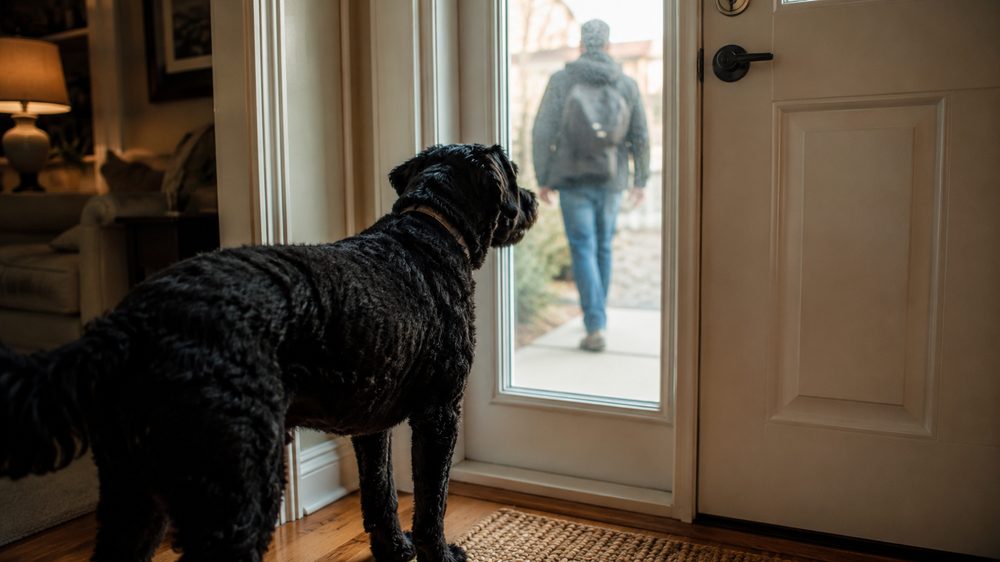
You leave for work and come home to a shredded couch cushion, a complaint from the neighbors about hours of howling, or a puddle by the door from a fully house-trained dog. That's not spite or boredom - it's very likely separation anxiety, one of the most common and most misunderstood behavior problems in dogs.
Boredom or genuine panic?
First, a crucial distinction. A bored dog left alone might chew a shoe or get into the trash - mischief from under-stimulation. A dog with true separation anxiety experiences something closer to a panic attack the moment they're left alone. The behaviors look similar but the internal experience is worlds apart, and so is the fix.
Tells that point to genuine anxiety rather than boredom: the distress starts within minutes of your departure, it happens every time you leave regardless of how tired or exercised the dog is, and there's often a frantic, anxious quality - destruction focused on exits and doorways, drooling, or house-soiling in an otherwise reliable dog. Setting up a camera to watch the first thirty minutes after you leave is the single most clarifying thing you can do.
What's actually happening
A dog with separation anxiety is genuinely terrified of being alone. The destruction isn't a protest - a dog clawing at a door is often trying desperately to reunite with you, and the soiling is a stress response, not a statement. Understanding this reframes the whole problem: you're not dealing with a badly behaved dog, you're dealing with a panicking one. That's why punishment is both cruel and useless here - you can't discipline away terror.
The approach that works
The core of treating separation anxiety is gradual desensitization: teaching your dog, in tiny increments, that being alone is safe and that you always come back. It's a patient process, but it's a proven one.
Start below the panic point. The key is never to push your dog into full distress during training. That might mean starting with absences of mere seconds - stepping out and immediately returning - and very slowly extending the duration only as your dog stays calm. Going too fast and triggering panic sets you back, so this is genuinely measured in small steps over weeks.
Defuse the departure cues. Dogs learn to dread the signs you're leaving - keys, shoes, the coat, the bag. You can blunt these by picking up your keys and then not leaving, putting on your shoes and sitting down, until those cues stop predicting departure and lose their power to spark anxiety.
Keep arrivals and departures boring. Big emotional goodbyes and ecstatic reunions amplify the contrast between "you're here" and "you're gone." Low-key comings and goings teach your dog that your leaving is no big deal.
Create positive associations. A special long-lasting treat or food puzzle offered only when you leave can help some dogs build a better association with alone-time. For dogs with milder anxiety, it can shift "you're leaving" toward "the good chew appears." For severe cases, it's a supporting player, not a cure.
What doesn't work
Punishment. Coming home to a mess and scolding your dog only adds fear of your return to the fear of your absence. The dog can't connect the correction to something they did hours ago anyway - they just learn that you sometimes come home angry.
Getting another dog as a fix. It occasionally helps, but separation anxiety is usually about you specifically, not just company, so a second dog frequently changes nothing - and now you have two dogs.
Flooding. Leaving an anxious dog alone for long stretches to "get used to it" doesn't build tolerance - it traps them in panic and typically makes things worse.
When to get help
Separation anxiety can be stubborn, and severe cases genuinely benefit from professional guidance. A certified trainer or veterinary behaviorist can build a structured desensitization plan, and a vet can evaluate whether anti-anxiety medication would help. For significant cases, medication paired with behavior work is often what makes progress possible - it lowers the panic enough for the training to take hold. That's not giving up; it's giving your dog a real chance to learn that alone can be okay.
The bottom line
Separation anxiety is panic, not misbehavior, and it responds to patience rather than punishment. Confirm what you're dealing with (a camera helps), then desensitize in small steps, defuse your departure cues, keep your comings and goings low-key, and build better associations with alone-time. For tougher cases, bring in a pro and talk to your vet. With consistent, compassionate work, the vast majority of dogs can learn that being alone isn't the end of the world - and you can finally stop dreading what you'll find when you get home.