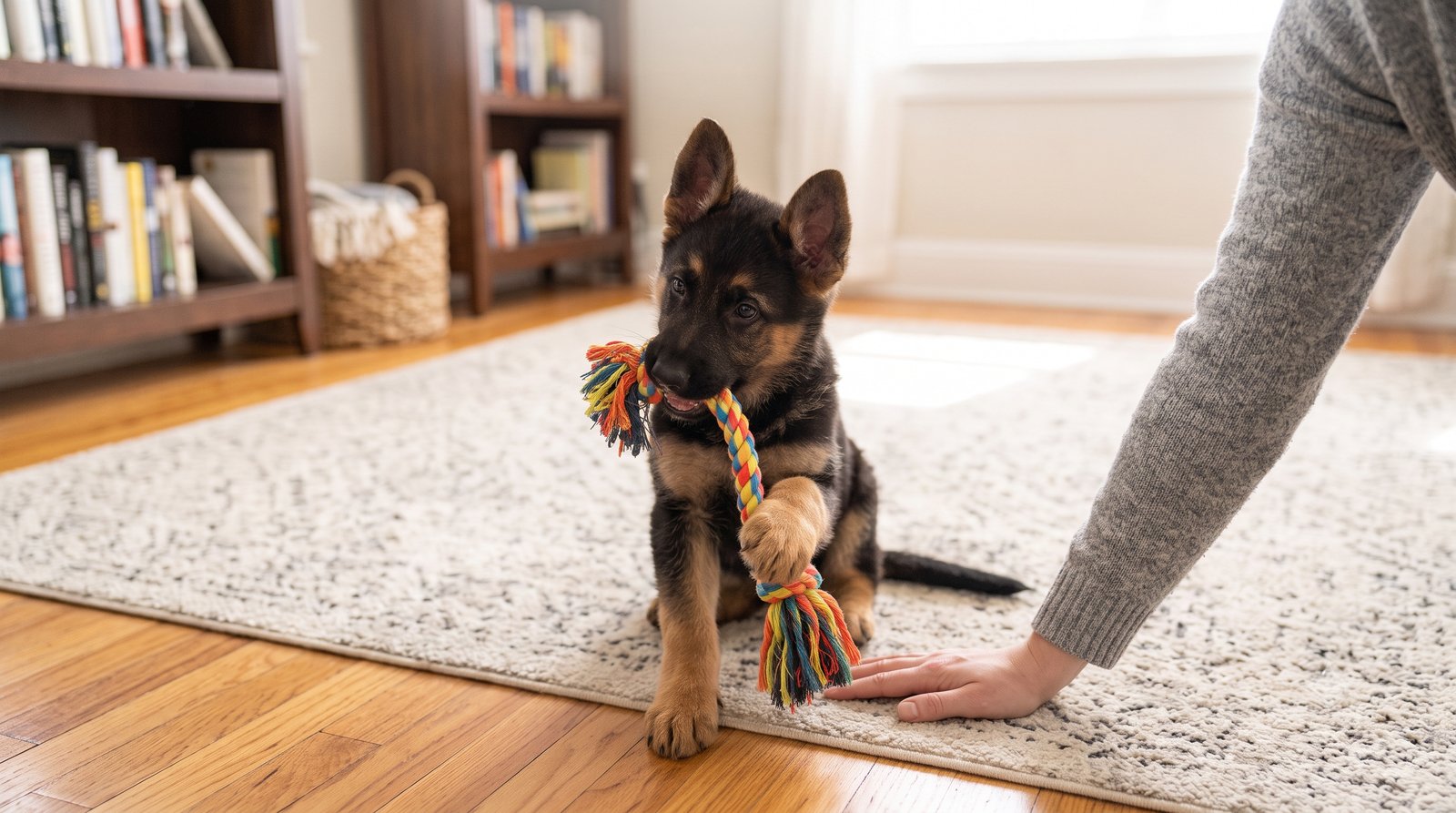
Those needle-sharp teeth are doing exactly what nature intended, and no, your puppy is not turning aggressive. Mouthing is how puppies explore the world and learn about their own strength. Your job is not to punish it out of them, it is to teach them how gentle a mouth needs to be.
Why puppies bite
Puppy biting is normal development, not a warning sign. Puppies investigate everything with their mouths, they bite in play the way they did with their littermates, and teething makes gnawing on anything, including your hand, feel good on sore gums. Most of it also spikes when a puppy is over-tired or over-excited, which is your first clue about how to handle it.
Teach bite inhibition
The single most valuable thing you can teach a puppy is a soft mouth. When you are playing and the teeth clamp too hard, let out a sharp "ouch" and immediately stop the game, going still or standing up and stepping away for a few seconds. You are recreating exactly what a littermate would do: bite too hard, and the fun ends. Puppies learn this fast when you are consistent. Over time you lower the bar, reacting to firmer nips first and then gentler ones, until your puppy learns to keep teeth off skin entirely.
Always offer a legal target
A puppy will not simply stop wanting to bite, so give the urge somewhere to go. Keep a toy or a rope within reach during play. The moment teeth find your hand, calmly swap in the toy and praise the chewing once they take it. You are not saying "no biting," you are saying "bite this, not me," which is a far easier lesson for a baby dog to follow.
Manage the triggers
An over-tired puppy bites like an over-tired toddler melts down. If the nipping is getting frantic and the zoomies have kicked in, the answer is usually not more play but a nap. Guide your puppy to a quiet crate or pen for some enforced downtime. You will be amazed how often "my puppy will not stop biting" is really "my puppy desperately needs to sleep."
What not to do
Do not punish physically. Holding the muzzle, scruffing, or any rough correction teaches a puppy that hands are scary, and can turn playful mouthing into real fear or defensiveness. It makes the problem worse, not better.
Do not use your hands or feet as toys. Wrestling with your fingers sends a mixed message, and then punishing the very biting you encouraged is unfair to the puppy.
Do not allow it sometimes. If biting is funny when the puppy is small, it is confusing when you suddenly forbid it at forty pounds. Pick the rule and keep it consistent across everyone in the house.
When it is more than teething
Ordinary puppy mouthing is loose, wiggly, and playful. If you see biting paired with a stiff body, hard staring, growling over food or toys, or bites that break skin hard and keep escalating past about five months, that is worth a professional set of eyes. A certified trainer or a veterinary behaviorist can help you tell normal puppy stuff from something that needs a structured plan.
This article is general information, not veterinary or behavioral advice for your specific dog. When in doubt, loop in a professional.
The bottom line
Puppy biting is a phase you coach your dog through, not a flaw you stamp out. Yelp and pause when it is too hard, redirect to a toy, protect your puppy's sleep, and stay consistent. With patience and a little management, the piranha months pass, and you are left with a dog who knows exactly how soft their mouth should be.