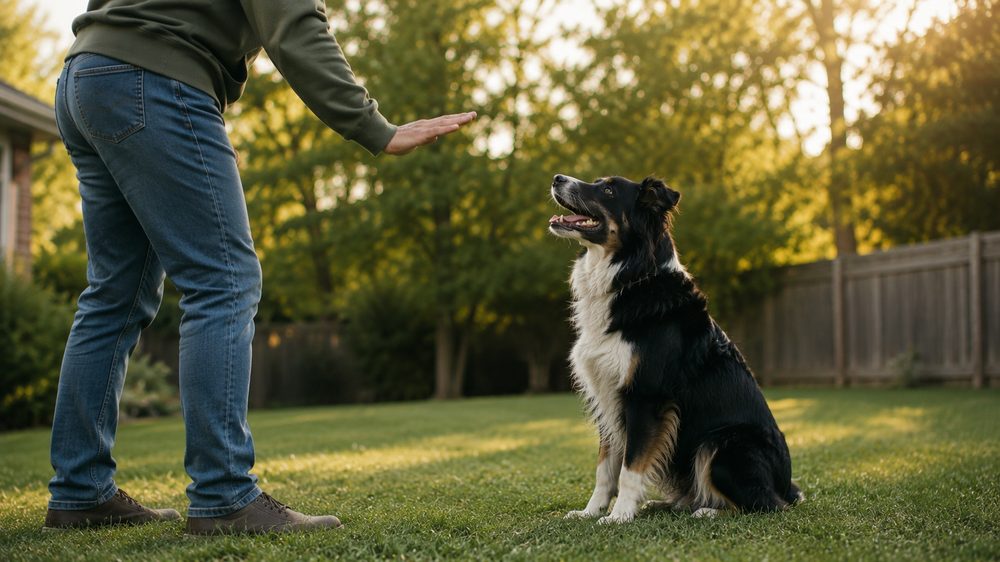
You brought your rescue dog home two days ago. They have not touched their food. They are glued to one corner of the room. They stare at the wall. You were expecting tail wags and gratitude, maybe a little chaos. Instead you have a dog who looks like they would rather be anywhere else on earth.
Here is what is actually happening: your dog is in shutdown. And it is completely normal.
The 3-3-3 decompression guide is the adjustment timeline most shelters mention once and most adopters immediately forget in the excitement of bringing their new dog home. It maps out three rough phases, 3 days, 3 weeks, and 3 months, and understanding it might be the single most useful thing you do for your rescue dog right now.
Let us walk through it properly.
The First 3 Days: Shutdown Is Not Calm
Some adopters get lucky and their new dog is social and curious from day one. Most do not. Most get a dog who is overwhelmed, shut down, and very, very still.
Shutdown looks like a dog who barely moves, does not eat much, will not engage with toys, and seems almost eerily calm. Here is the trap: a lot of first-time adopters mistake this for a wonderfully easy dog. "She is so chill!" No. She is coping.
Your dog has just lost every familiar smell, sound, person, and routine she knew. Even if shelter life was miserable, it was predictable. Your house is not. So she is conserving energy and waiting to see what happens next.
What to do in days one through three:
- Give her a quiet, low-pressure space. A crate or a specific room with her bed, water, and somewhere to retreat works well.
- Skip the welcome party. No big family introductions, no kids piling on, no neighbors popping over to meet her. It can wait.
- Keep the house calm and the schedule simple.
- Let her sniff and explore on her own terms. Do not force interaction.
Leash and door safety matters enormously right now. A dog in shutdown can bolt without warning the moment a door opens. Use a slip lead or double-clip system every time you go outside. A dog who does not know you yet has no reason to come back if she runs. This is not the time to test the recall she does not have yet.
The First 3 Weeks: Routine Kicks In, and So Does Personality
Around the one-week mark you will probably notice your dog starting to emerge. She will sniff the kitchen. She might bring you a toy. She will start to figure out where the good napping spots are.
By week two or three, you will also start to see the behaviors she was too shut down to show you before. This is where adopters sometimes panic. "She was perfect the first week. Now she is destroying things and barking at everything. Did something go wrong?"
Nothing went wrong. She just relaxed enough to start being a dog.
This is also when dogs start testing limits. Which means if you have not set house rules yet, now is the time you will really wish you had. Start as you mean to go on. If she is not allowed on the furniture eventually, do not let her on the sofa now because she seems sad. If you want her to sit before meals, start that habit on day one. Changing rules midway through is confusing for her and exhausting for you.
A few things to skip during the first three weeks:
- The dog park. Throwing a stressed, still-adjusting dog into a chaotic off-leash environment is a recipe for a bad experience. Wait until you know her better.
- Long road trips or overnight stays. Keep her world small and consistent for now.
- Introducing too many new people at once. One or two calm adults at a time is plenty.
What does help enormously in this phase is routine. Same walk time, same feeding time, same bedtime process. Predictability tells your dog that life is now safe and consistent. That is what she needs more than anything.
What Normal Stress Behaviors Look Like
During weeks two and three especially, you might see any of the following: excessive licking, pacing, yawning, lip-licking, whale eye (showing the whites of their eyes), a tucked tail, refusing food, loose stools, or the opposite, constipation. These are all stress responses and they are common.
On the other end, you might also see over-the-top zoomies, mouthiness, jumping, or barking fits. Also stress. Just expressed differently.
None of this means you have adopted the wrong dog. It means she is processing.
If you are genuinely concerned about a health issue, a vet visit is always a reasonable call in the first week anyway to get a baseline checkup sorted.
The First 3 Months: Building Real Trust
Around the three-month mark, most rescue dogs have genuinely landed. They know the routine. They trust you. They have figured out the house rules. You will notice the difference because the low-grade tension in the house just sort of lifts.
This is when training really starts to click, when recall becomes something you can actually work on, and when her real personality comes out fully. Some dogs take longer. Senior dogs, dogs with a history of trauma, or dogs who spent a long time in the shelter system may need more time and that is fine.
What still matters at three months:
- Keep training consistent. Short sessions, positive reinforcement, real rewards.
- Continue working on leash skills and basic commands. Do not assume she is fully settled and coast.
- Watch for separation anxiety as your bond deepens, since some dogs who were fine alone in week one start struggling in month two once they have attached to you.
One Last Thing
If your dog is on day four and you are quietly convinced she is depressed or that you have done something wrong, you probably have not. The adjustment timeline is not neat or linear. Some dogs bounce back faster. Some take the full three months to stop looking over their shoulder.
The 3-3-3 decompression guide is a framework, not a guarantee. What you are actually offering her is something shelter life never could: time, consistency, and someone in her corner.
That is not nothing. In fact, for a rescue dog in week one, it is everything.
If you found this helpful, take a look at our realistic week-by-week guide to the first 30 days. Getting that structure sorted early is one of the best things you can do for a dog who is still learning that this time, home is permanent. 🐾