The pet industry would love to sell you a closet full of gadgets, themed outfits, and a different harness for every day of the week. We've tested an embarrassing amount of it. Here's the short list of gear that earns its place - and the popular stuff that's mostly a waste of money.
The genuinely essential
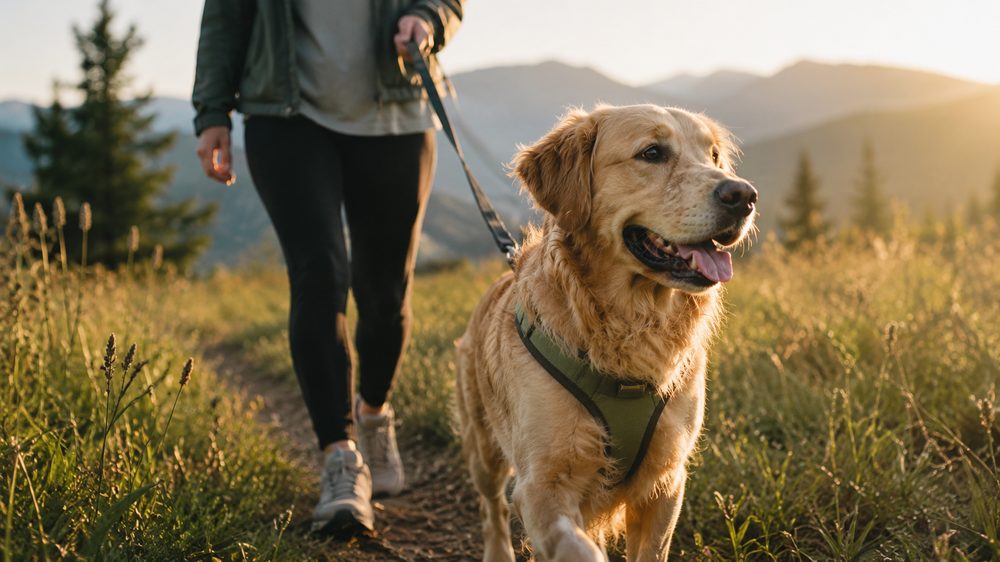
A well-fitted harness. For most dogs, a good harness beats a collar for walking - it takes pressure off the neck and gives you better control, especially for pullers or flat-faced breeds prone to airway strain. A front-clip design adds gentle steering for dogs still learning leash manners. Fit is everything: you should be able to slide two fingers under any strap, with no rubbing at the armpits. This is worth spending on and worth fitting carefully.
A standard leash. A simple four-to-six-foot leash gives you control and clear communication. Skip the retractable for everyday walks - more on that below. A sturdy clip and comfortable handle are all you need; you don't have to overthink it.
ID and a collar to hang it on. Even microchipped dogs need a visible ID tag - it's the fastest route home if your dog gets loose, since anyone who finds them can read a phone number instantly. The collar's main job for many dogs is simply holding that tag. Pair the tag with a registered microchip and keep both up to date.
Food and water bowls that suit your dog. Stainless steel is durable, dishwasher-safe, and doesn't harbor bacteria the way scratched plastic can. For fast eaters, a slow-feeder bowl genuinely helps, since gulping air contributes to bloat risk in deep-chested breeds. This is a cheap upgrade with a real payoff.
Enrichment toys. Not a luxury - a necessity. A bored dog is a destructive dog, and food-puzzle toys that make your dog work for a meal burn mental energy that would otherwise go into your shoes. A classic stuffable rubber toy is the workhorse here: nearly indestructible, endlessly reusable, and capable of keeping a dog happily occupied.
A crate or defined space. Used well, a crate is a safe den for rest, travel, and house-training - not a punishment. Size it so your dog can stand, turn, and lie down comfortably. Many dogs come to love having a space that's reliably theirs.
Worth it for some dogs
A quality bed. Most dogs appreciate a supportive bed, and for seniors or large breeds, an orthopedic one is genuinely worth the cost for joint comfort. For a young dog who shreds everything, you might wait until the chewing phase passes before investing.
Cold and wet weather gear. Coats and boots are pure fashion for some dogs and real necessities for others - thin-coated breeds in genuine cold, or dogs walking on salted or scorching pavement. Need, not trend, should decide.
A grooming brush suited to the coat. The right brush for your dog's specific coat type makes shedding and matting manageable. The wrong one does little. Match the tool to the coat rather than grabbing whatever's nearest the register.
A long line. For recall training and giving dogs freedom in open spaces, a fifteen-to-thirty-foot training line is fantastic - the controlled freedom a retractable only pretends to offer.
Save your money
Retractable leashes. They teach pulling (the dog learns that pulling extends the lead), offer poor control in an emergency, and the thin cord can cause nasty injuries. For training and city walks, they're a step backward. A long line does the "freedom" job far better and more safely.
Most clothing and costumes. Cute for a photo, but unless it's solving a real cold-weather or protection problem, your dog doesn't need a wardrobe. Many actively dislike it.
Gimmick gadgets. The endless parade of novelty feeders, single-use contraptions, and "as seen online" devices mostly end up in a drawer. When tempted, ask what real problem it solves that simpler gear doesn't.
Overpriced "designer" everything. A premium price tag on a basic collar or bowl rarely buys better function. Spend on the things where quality matters - harness, bed, enrichment - and stay basic on the rest.
How to decide on anything
Before any purchase, one question cuts through the marketing: what problem does this solve for my dog? A puller needs a front-clip harness. A gulper needs a slow feeder. A senior needs an orthopedic bed. A bored chewer needs puzzle toys. Buy for the dog in front of you and their actual needs, and you'll skip almost everything the industry hopes you'll impulse-buy.
The bottom line
The real essentials are short: a well-fitted harness, a standard leash, ID, sensible bowls, enrichment toys, and a crate or defined space. Add a good bed and weather gear if your dog needs them. Skip the retractable leashes, the costumes, and the gadgets. Spend where function matters and stay basic everywhere else - your dog cares about a comfortable walk and a good chew, not a designer label.