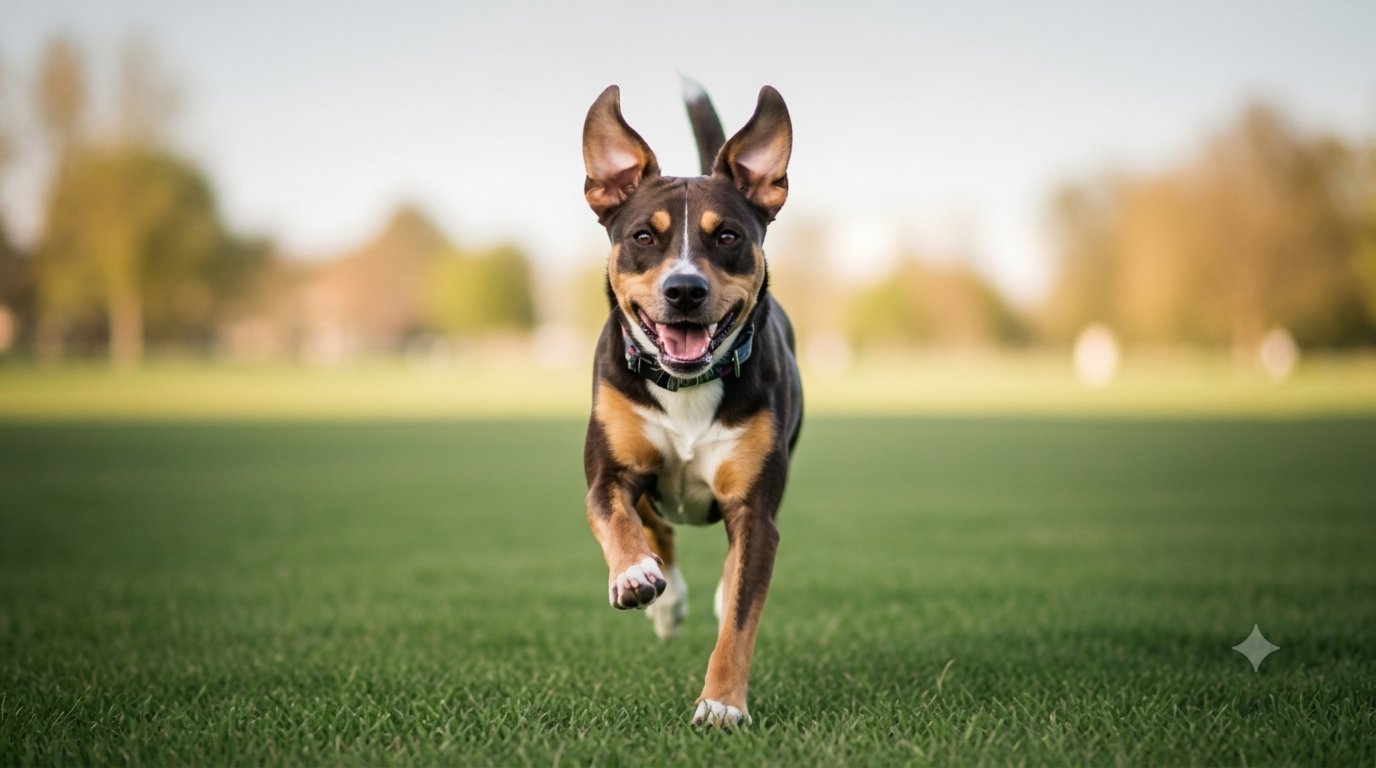
You practiced. You practiced a lot. Your dog sits on cue, comes when called, and walks beside you like a dream. Then you get to the park and it is like you have never met.
He is not broken. He is not blowing you off. He just learned something slightly different from what you think you taught him.
Here is what is actually going on, and what to do about it.
Your Dog Did Not Learn the Command, He Learned the Context
Dogs are concrete thinkers. When your dog learned "sit" in your kitchen, he learned something closer to "sit in this room, with you standing like that, with those smells around me." The word was only one part of the picture.
Change the picture, and the cue stops making sense to him.
This is called context-dependence, and it is one of the most common reasons real-world obedience training falls apart. Your dog is not being defiant at the park. He genuinely does not recognize the situation as one where the rules he learned apply.
Trainers call the fix "proofing," and it is the step most owners skip entirely, through no fault of their own. Nobody tells you it exists.
What Proofing Dog Commands Actually Means
Proofing is the process of teaching your dog that a cue means the same thing everywhere, with every level of distraction, at every distance from you.
It is not about drilling harder. It is about exposing your dog to gradually more challenging conditions and letting him practice getting it right in each one before you raise the bar again.
Think of it like building a skill in layers. First the kitchen, then the front yard, then the sidewalk, then the quiet park, then the busy park. Each step is its own training session, not a test.
The goal is a dog who hears "come" and responds whether he is in your living room or locked onto a squirrel twenty feet away. That dog exists. He just needs you to build the skill properly rather than hoping it transfers on its own.
Why Distractions Are So Much Harder Than You Think
At home, you are the most interesting thing around. At the park, you are competing with other dogs, new smells, moving people, food on the ground, and a hundred other things that are, honestly, more exciting than you.
This is not a loyalty problem. It is a math problem. Your dog has limited attention, and distractions are expensive. A cue that cost almost nothing to respond to in your kitchen now costs him real effort. If you have not built enough value into responding to that cue, the distraction wins.
This is why reward history matters so much during proofing. You need your dog to have a long track record of great things happening when he responds to a cue in a new place. That is how you build a behavior that holds up under pressure.
A Step-by-Step Proofing Plan for Three Key Behaviors
You do not have to proof every behavior at once. Start with the three that matter most in real life: recall, leave it, and loose-leash walking.
Recall
Step one is inside, no distractions, high rate of reward. You probably have this already. Step two is your backyard or front yard with a long line attached for safety. Ask for the recall, reward generously when he comes. Step three is a quiet street or empty lot. Step four is a quiet park at a slow time, like early morning on a Tuesday. Step five is a busier park, still with a long line until you are confident.
Never remove the long line before the behavior is solid at that level of distraction. The long line is not a punishment. It is a safety net that lets you practice without the risk of your dog blowing past you into traffic.
Leave It
"Leave it" is one of the hardest cues to proof, because real-world distractions are exactly the kind of thing your dog most wants to investigate. Start by proofing on leash with low-value items on the ground in your yard. Reward him for looking away. Move to higher-value items only after he is consistent. Then move to new locations and start low again. Every new environment resets the difficulty level slightly, so expect a small dip and plan for it.
Loose-Leash Walking
This one falls apart fast in new places, because the environment itself is the distraction. Your dog pulls toward everything. A solid proofing plan starts with short walks in familiar, low-traffic areas and lots of reinforcement for the position you want. Then you slowly add distance, duration, and distractions. If your dog is pulling, you have moved too fast. Back up a step.
Common Mistakes That Slow Proofing Down
Skipping levels. If your dog is not solid in the front yard, he is not ready for the park. Moving too fast just teaches him that cues are optional when things get interesting.
Asking for too much too soon in a new place. When you arrive somewhere new, drop your expectations back by about fifty percent. Let him sniff, let him adjust, then start working at a low level of difficulty. This is not babying him. It is smart training.
Fading rewards too fast. Some owners pull back on treats the moment a behavior looks reliable. During proofing, keep the reward rate high in every new environment. You can fade treats later, once the behavior is rock solid everywhere.
Getting frustrated. Your dog reads your energy. If you are tense and repeating cues louder, he is more anxious and less able to think. Stay calm, make it easier, get a win, then build from there.
What to Expect and When
Proofing takes time. A few weeks of consistent, progressive practice is a realistic minimum for most dogs. Some behaviors take longer. Some dogs pick it up faster than others. The measure of progress is not whether your dog listened at the park today. It is whether he is responding more reliably at each level than he was two weeks ago.
Set small goals. Celebrate small wins. Real-world training is built on a long string of low-drama practice sessions, not one breakthrough moment.
Your Next Step
Pick one behavior. Pick one new location that is just slightly harder than your usual training spot. Head out this week with high-value treats and realistic expectations. Get five good reps and call it a win.
That is it. That is proofing. Do it enough times in enough places, and the dog who ignores you at the park becomes the dog people stop to ask you about. 🐾