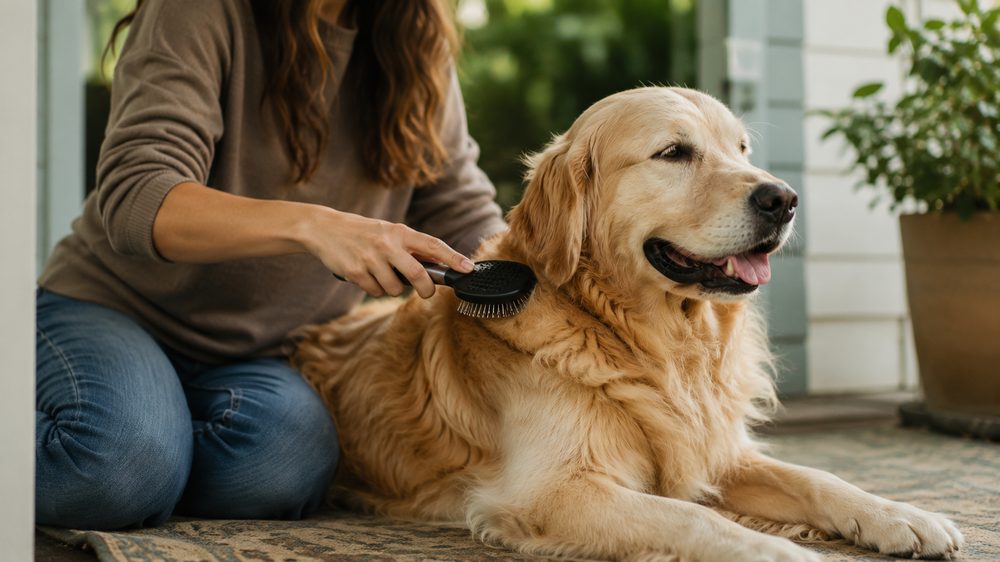
The salt trucks roll out and suddenly every sidewalk your dog loves to trot down is coated in rock salt, granular ice melt, or some mystery blend the city picked up in bulk. Your dog doesn't know that. They just want their walk.
Here's the thing: road salt and ice melt don't just make paws sore. The residue sits between your dog's toes, and the first thing most dogs do when they get inside is lick their feet clean. That's the part worth paying attention to.
This post covers a simple routine you can actually stick to, before the walk, during it, and after. Plus what to look for on the sidewalk, how to get your dog into booties without a full circus, and when to call your vet.
Why road salt and ice melt are rough on dog paws
Rock salt is abrasive. It pulls moisture from the skin and can cause cracking, redness, and raw spots on paw pads, especially when your dog is walking on it every single day through a long winter. Ice melt products vary widely. Some use sodium chloride (plain salt), others use calcium chloride, magnesium chloride, or potassium chloride. A few contain urea or glycol-based compounds. The exact mix matters less than knowing that most of them are irritating to skin and should not be licked up in any significant amount.
Cold and dry indoor air from furnace heat also does a number on paw pads between walks. Think of it as a one-two punch: chemicals outside, dry heat inside. Cracked pads are the predictable result.
Before the walk: two minutes of prep
Trim the fur between the pads. If the hair between your dog's toes is long enough to tangle, ice balls will form there during winter walks. Those ice balls hurt, and they trap salt and chemicals against the skin. Keep that fur trimmed short and flush with the pad.
Apply a thin layer of paw balm. A wax-based paw balm creates a barrier between the pad and whatever your dog is walking through. Apply it to the pads and between the toes before you head out. You don't need much. Rub it in, let your dog shake their feet for ten seconds, and go. If you don't have balm, plain petroleum jelly works as a temporary option.
During the walk: what to watch for
Choose your route with salt in mind. Grass and packed snow have far less chemical exposure than treated pavement and sidewalks. It's not always possible to avoid salted surfaces, but when you have the choice, take the cleaner path.
Watch your dog's body language. A dog that starts lifting a paw, limping on one side, or suddenly stops and sits down mid-walk is telling you something is wrong. That's often ice between the toes or salt irritation on a raw spot. Stop, check the paws with your gloved hand, and head home if you find anything red, raw, or packed with ice.
After the walk: the step that actually matters most
This is where most of the protection happens, and it takes under two minutes.
Rinse or wipe every paw before your dog walks further into the house. Warm water and a cloth, or a dedicated paw-washing cup if your dog tolerates it. Work between every toe. That's where salt and ice melt accumulate and where your dog is most likely to lick.
Dry the paws thoroughly afterward. Wet paws sitting in indoor air crack faster than dry ones. A small towel by the door makes this a habit instead of a production.
If your dog is a determined self-groomer and licks their paws the moment you're done wiping, you're not imagining it as a risk. Keep the routine consistent and quick so they don't get the chance before you've finished the job.
Choosing a pet-safer ice melt for your own property
You can control what goes on your own steps and driveway even if you can't control the city streets. Look for ice melt products labeled as pet-safer or pet-friendly at the hardware store. These typically use magnesium chloride or urea as the primary ingredient rather than calcium chloride or sodium chloride, and they're formulated to be less irritating. No ice melt product is completely harmless in large amounts, but pet-labeled products are a meaningful step down in irritation risk. Use the minimum amount that does the job and clear it after the ice breaks up.
What about booties?
Booties are the gold standard for paw protection in winter. They keep paws off the salt entirely. The catch is that most dogs hate them on the first try and look like they've forgotten how legs work.
The fix is short, treat-paired practice sessions before winter hits. Put one bootie on, give a treat immediately, take it off. Repeat. Build up to all four over several sessions. Once your dog understands that booties predict treats and walks, most of them come around. Fleece-lined, waterproof styles with a rubber grip sole tend to stay on better than the cheaper slip-on versions. Size matters: your dog's paw should sit flat in the bootie without toes curling.
If your dog flatly refuses booties after consistent practice, paw balm plus a solid post-walk rinse routine is a perfectly good alternative.
Dry, cracked pads are their own problem
Furnace heat indoors draws moisture out of everything, including paw pads. If your dog's pads feel rough, flaky, or are starting to crack at the edges, a regular application of paw balm (two to three times a week, not just before walks) can keep them in better shape through the season. Soft pads handle cold and chemical exposure better than dry, cracked ones.
When to call your vet
Mild dryness and slight redness after a salty walk are common and manageable with the routine above. But some situations call for a vet, not a blog post.
Call your vet if you notice bleeding or open sores on the pads, significant swelling, a dog that keeps chewing or licking a paw obsessively after walks, or any sign that your dog ate ice melt rather than just walked through it. Those things are outside the range of home care.
The quick before, during and after checklist
Before the walk:
- Trim fur between the pads so ice balls cannot form.
- Apply a thin layer of paw balm to pads and between toes.
During the walk:
- Choose grass and packed snow over treated pavement when possible.
- Watch for lifting a paw, limping, or your dog stopping suddenly.
After the walk:
- Rinse or wipe all four paws with warm water, including between every toe.
- Dry thoroughly.
- Check for redness, cracking, or anything lodged between the toes.
A few walks in, this becomes automatic
The first time feels like a whole thing. Balm, route-checking, rinse, dry, towel by the door. After a week it takes ninety seconds and you stop thinking about it. Your dog's paws stay in better shape, the licking habit after walks dies down, and winter becomes a lot less of a guessing game.
That's the whole routine. Two minutes before, a little awareness during, two minutes after. Because Google doesn't have a dog. 🐾