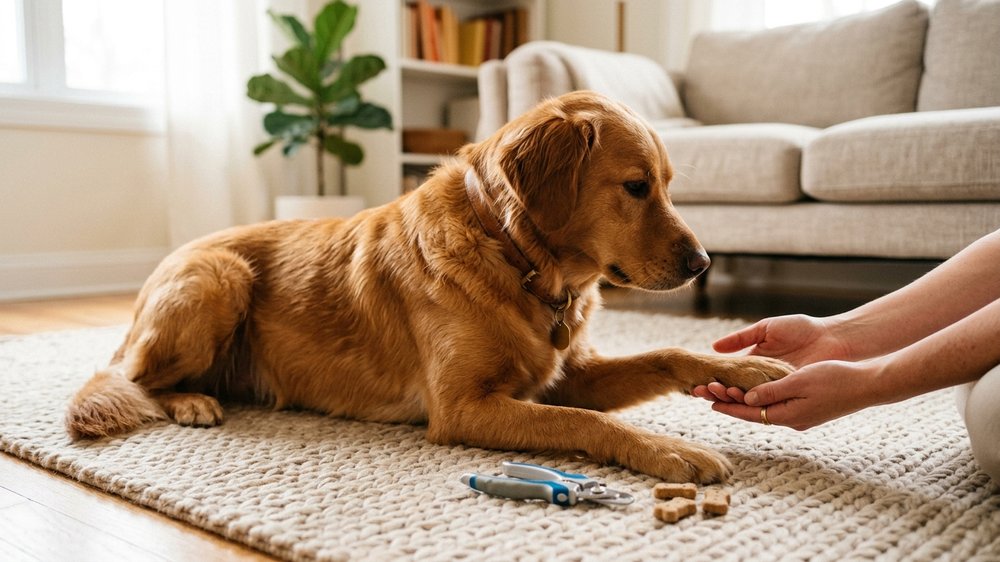
Let's be honest. For a lot of dog owners, nail trim day ranks somewhere between "mildly stressful" and "full contact sport." Your dog disappears the second the clippers come out. You second-guess every snip. Someone ends up dramatically flopped on the floor - and it might not be the dog.
Here's the thing: nail trimming doesn't have to be a battle. With the right setup, the right tools, and a bit of patience up front, it becomes one of those routine tasks your dog tolerates just fine. Some dogs even learn to like it.
This is the practical, no-drama guide to safe dog nail care at home.
Why Dogs Hate Nail Trims (And What You Can Do About It)
Most dogs aren't born hating nail trims. They learn to hate them - usually after one bad experience, or because no one ever taught them that clippers aren't a threat.
Dogs have a lot of nerve endings in their paws. Add in the weird pressure sensation of a clipper or the vibration of a grinder, and it's genuinely unfamiliar and uncomfortable at first. If they've ever had a nail cut too short, that memory sticks.
The fix is desensitization - slow, positive exposure over time. Before you clip a single nail, spend a few sessions just handling your dog's paws. Pick them up, hold them gently, touch each toe. Give a treat. Put the clippers on the floor and let your dog sniff them. Touch the clippers to your dog's paw without clipping. Treat again. Repeat until there's no tension. This isn't wasted time - it's the reason future trims go smoothly.
How to Tell When Your Dog's Nails Need Trimming
You'll usually hear it before you see it - a clickety-clack on hard floors means nails are too long. Other signs include nails that visibly curve, touch the ground when your dog stands, or snag on carpet.
Long nails aren't just a cosmetic issue. They change how your dog distributes weight when walking, which can lead to discomfort over time. Regular trimming is a small thing that has a real impact on how your dog moves and feels.
As a general guide, most dogs need a trim every three to four weeks. Dogs who walk a lot on concrete may need less frequent trims because pavement wears the nails down naturally. Couch dogs usually need more.
Clippers vs. Grinder - Which One Should You Use?
Both work. It comes down to your dog and your confidence level.
Scissor-style clippers (also called bypass clippers) are quick and clean. They're good for small to medium dogs with thinner nails. Guillotine-style clippers are another option, though many groomers prefer the scissor style for better control. Whatever you choose, sharp blades matter - dull clippers crush rather than cut cleanly, and that's uncomfortable.
Grinders (like the Dremel-style tools) work well for dogs with thick nails or dogs who panic at the snap of clippers. They smooth rather than cut, which means less risk of going too deep in one go. The trade-off is noise and vibration, so desensitization is even more important before introducing a grinder.
How to Find the Quick (And Avoid Cutting It)
The quick is the blood vessel and nerve that runs inside the nail. Cut into it and it bleeds. It also hurts, which is why nail-trim anxiety exists in the first place.
On light-colored nails, you can see the quick - it looks like a pinkish shadow inside the nail. Stop a few millimeters before it.
On dark nails, you can't see it directly, which is where a lot of owners lose confidence. The trick: clip small amounts at a time and look at the cut end of the nail after each snip. When you start to see a dark, slightly gummy-looking center appear, stop. That's the boundary. You're close to the quick and that's exactly where you want to stop.
Good lighting helps. A headlamp sounds ridiculous until you actually try it.
Step-by-Step: How to Trim Your Dog's Nails Calmly
Get your supplies together before you bring the dog over. You'll need clippers or a grinder, styptic powder (or cornstarch as a backup), and treats. Plenty of treats.
Pick a position that works for both of you. Some dogs are fine sitting or lying down. Some do better on an elevated surface. If your dog is small enough, a non-slip mat on a table gives you better access without bending awkwardly.
Hold the paw gently but firmly. Press the pad slightly to extend the nail forward.
Clip small amounts - you can always take more off, you can't put it back. Work through each nail, treating regularly throughout. Don't try to rush through all four paws in one go if your dog is nervous. Do one paw and call it a win. Do another tomorrow.
Don't forget the dewclaws if your dog has them. They don't touch the ground, so they never wear down naturally and can curl back into the leg if left too long.
What to Do If You Cut the Quick
It happens to everyone. It bleeds, your dog yelps, your heart sinks. Take a breath - it's okay.
Apply styptic powder directly to the nail tip and hold gentle pressure for 30 seconds. Cornstarch works in a pinch if you don't have styptic powder handy. The bleeding usually stops quickly. Comfort your dog, give a treat, and end the session there for the day.
Don't catastrophize it and don't skip the next trim out of guilt. The quicker you get back to regular trimming, the more routine it becomes for both of you.
Keeping Your Dog Calm Throughout
Treats are your best tool - but timing matters. Reward during the trim, not just after. You're teaching your dog that the process itself is fine, not just that it eventually ends.
Keep sessions short when you're starting out. Five minutes of positive experience beats twenty minutes of stress every time. Calm voice, calm energy. If you're tense, your dog feels it.
Some dogs do better with a lick mat smeared with peanut butter or wet food to keep them occupied while you work. It's not cheating. It's practical.
A Word on Regular Nail Care and Overall Health
Beginner dog grooming often focuses on baths and brushing, but nail care is just as important and skipped far more often. Overgrown nails affect posture and gait. In older dogs especially, they can contribute to joint discomfort by changing how weight is loaded through the feet.
Short, consistent trims also keep the quick from growing forward. When nails are regularly maintained, the quick recedes over time, which makes future trims easier and lower-risk.
Make It a Habit, Not an Event
The dogs who handle nail trims best are the ones whose owners made it a normal, low-key part of life from the start. Not a dreaded monthly ordeal - just another Tuesday.
Start slow, use good tools, take small clips, treat generously, and don't be hard on yourself if it takes a few sessions to find your rhythm. You're learning a skill. So is your dog. 🐾
How to Trim Black Dog Nails Without Hitting the Quick
Black nails hide the quick, so do not guess how far you can cut. Work from the tip in very thin slices. After each cut, look straight at the cross-section of the nail. The dry outer material will gradually give way to a smoother center. Stop when a darker central dot becomes visible or the center begins to look soft rather than chalky.
- Hold the paw securely without squeezing.
- Trim one thin slice from the end at a time.
- Check the cut surface after every slice.
- Stop before the dark center becomes prominent.
- Keep styptic powder within reach before you begin.
A grinder removes less nail with each pass and may feel safer for dark nails, but some dogs dislike the sound or vibration. Clippers are faster. The best tool is the one your dog can calmly tolerate while you work slowly.