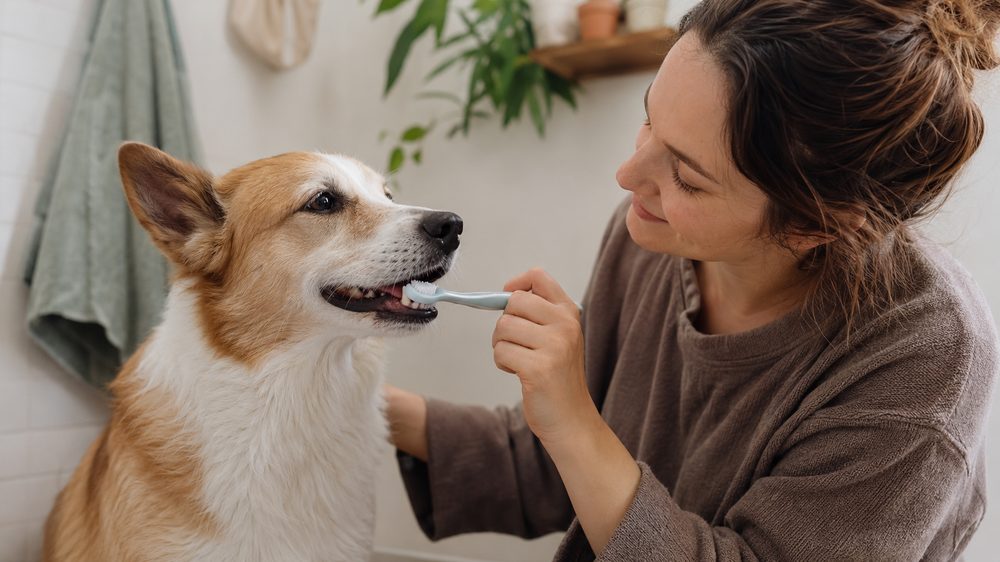
Most dogs show signs of dental disease by age three, and it's one of the most common health problems vets see - yet it's also one of the most preventable. The catch is that "preventable" requires a toothbrush and a little consistency. Here's how to make it painless for both of you.
Why this matters more than it sounds
Dental disease isn't just bad breath and yellow teeth. Plaque hardens into tartar, gums become inflamed, and bacteria gain a foothold that can affect the heart, kidneys, and liver over time. The mouth is a gateway, and a neglected one causes real pain - dogs just hide it, eating through discomfort that would have us at the dentist immediately.
The good news baked into all of this: a consistent home routine prevents the large majority of it. You're not managing an inevitable decline. You're stopping a problem before it starts.
The one rule you can't skip
Never use human toothpaste. It often contains xylitol or fluoride, both of which are toxic to dogs, and dogs can't spit. Use a toothpaste made for dogs - they come in flavors like poultry and beef that make the whole thing easier to sell to your skeptical patient.
How to actually brush
The mistake most people make is going straight for a full brushing on day one, getting resistance, and concluding their dog "won't let them." The fix is to build up in stages over a couple of weeks.
Step 1: Make the paste a treat. For a few days, just let your dog lick a little dog toothpaste off your finger. That's it. You're teaching them that this stuff is good news.
Step 2: Touch the teeth. Once they're happy with the paste, start gently lifting a lip and rubbing the paste onto a few teeth with your finger or a finger brush. Keep it short and pleasant. Stop before they get squirmy.
Step 3: Introduce the brush. Move to a dog toothbrush, angled slightly toward the gumline, with gentle small circles on the outer surfaces of the teeth. You mostly only need to do the outsides - the tongue handles a lot of the inner surfaces, and reaching them tends to start fights you don't need.
Step 4: Build the habit. Aim for daily. Plaque starts mineralizing into tartar within a couple of days, so frequency genuinely matters. A quick daily pass beats an occasional deep scrub. Tie it to an existing routine - after your own evening brush, say - so it becomes automatic.
What about all the other products?
Dental chews, water additives, and special diets can help, and vet-recommended dental treats with the right credentials do reduce plaque. But treat them as supplements to brushing, not replacements. Nothing matches the mechanical action of a brush actually disrupting plaque before it hardens. Think of chews as the floss, not the toothbrush.
Don't skip the professional cleaning
Home care prevents buildup; it doesn't remove tartar that's already cemented on or address disease below the gumline. That's what professional dental cleanings under anesthesia are for. Your vet will tell you the right interval for your dog, and resist the appeal of "anesthesia-free" cleanings, which mostly polish the visible surface while missing the part that actually matters under the gums.
Signs you need the vet sooner
Book a dental check if you notice persistent bad breath, red or bleeding gums, visible tartar, broken or loose teeth, dropping food, pawing at the mouth, or reluctance to chew. These are signs disease is already underway, and the longer it runs, the more invasive the fix.
The bottom line
Two minutes a day with a dog toothbrush and dog toothpaste prevents the most common health problem your dog is likely to face. Build the habit slowly so your dog tolerates it, brush daily once they do, back it up with vet cleanings on schedule, and you'll spare your dog a lot of avoidable pain - and yourself a lot of avoidable vet bills. Start tonight, even if it's just letting them lick the paste off your finger.