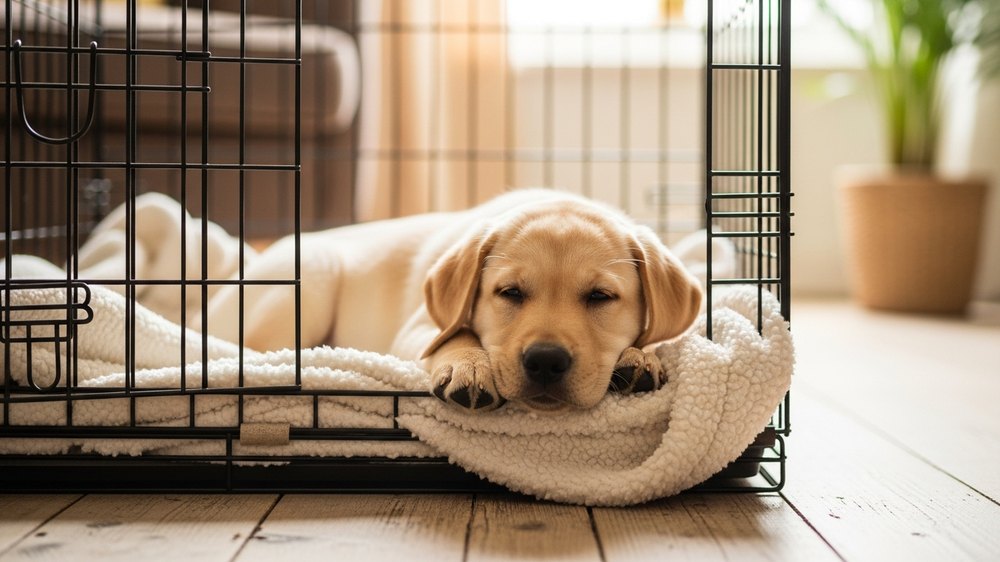
You brought home a puppy. Congratulations, your floors will never be the same.
But jokes aside, one of the biggest challenges new puppy owners face hits fast: the moment you leave the room, the crying starts. Maybe it's a whimper. Maybe it's a full operatic performance. Either way, it's rough on everyone, including the dog.
Here's the thing most people get wrong. They think a crate is a cage. A timeout corner. Something you use when you're out of ideas. It isn't. When done right, a crate is the closest thing you can give a puppy to a den, and dogs are hardwired to want one.
Let's break down why that matters, and what to actually do about it.
Why Puppies Feel Anxious When You Leave
Puppies are social animals. In the wild, a young dog separated from the pack is a vulnerable dog, so their instinct is to signal distress loudly and immediately. That's the crying you hear when you close the front door.
The problem isn't that your puppy is badly behaved. The problem is that nothing in their world yet tells them you're coming back, that they're safe, or that being alone is survivable.
Separation anxiety prevention isn't about teaching your puppy to love being alone. It's about teaching them that alone is calm and temporary, not a crisis. A crate helps you do exactly that.
The Den Instinct: Why a Crate Works
Dogs descend from den animals. Small, enclosed, predictable spaces feel safe to them because safety in the wild meant having walls on three sides and knowing what was coming next.
A properly introduced crate gives your puppy that same signal: this space is mine, nothing bad happens here, I can relax.
The key phrase there is properly introduced. A crate that arrives with force, frustration, or punishment doesn't feel like a den. It feels like a trap. That's the version that backfires.
Done gently and consistently, though, puppy crate training taps into something your dog already understands at a gut level. You're not fighting their instincts. You're working with them.
What Crate Training Actually Does for Anxiety
When your puppy has a crate they trust, a few things start to happen.
First, they have a reliable safe space. When the world feels overwhelming, whether that's a loud noise, an unfamiliar visitor, or just the general chaos of being a small dog in a big house, they have somewhere to go. That alone reduces stress.
Second, routine kicks in. Puppies feel safer when they know what's coming next. A crate creates a predictable rhythm in the day: in the crate, out of the crate, time with you, back in the crate. That rhythm is genuinely calming for a developing nervous system.
Third, you prevent the destructive spiral. A puppy left loose and anxious chews things, has accidents indoors, and practices exactly the behaviors that make the experience of being alone feel worse. The crate interrupts that before it becomes a pattern.
Separation anxiety prevention is much easier than separation anxiety treatment. Starting this early matters.
How to Introduce a Crate Without the Drama
There's no rush here. Slow is fast when it comes to puppy crate training.
Step one: Make it interesting before it's a requirement. Put the crate in a main living area where you spend time. Leave the door open. Toss a treat or two inside. Let your puppy wander in and out at will. Don't close the door yet. Just let them get curious.
Step two: Feed meals near or inside the crate. Food is a powerful association tool. Start with the bowl just outside the crate, then just inside, then at the back. You're building the message: this place means good things happen.
Step three: Practice short, calm closures. Once your puppy is comfortable going in, gently close the door for a few seconds while they eat or chew a treat. Open it before they have a chance to fuss. Keep it positive. Keep it brief.
Step four: Build duration slowly. Over several days, gradually extend the time the door stays closed. Stay nearby at first. Read a book. Watch something. Don't make a big deal of going in or coming out. Matter-of-fact is exactly the energy you want.
Step five: Introduce short absences. Leave the room. Come back before any real distress kicks in. You're proving a point: you leave, you come back, nothing bad happened. Repeat this enough times and it becomes your puppy's new normal.
A few practical notes on new puppy owner tips worth keeping front of mind:
- Mind the bladder. Puppies have tiny bladders. A rough guide is that a puppy can hold it for about one hour per month of age, so a two-month-old needs a bathroom break every couple of hours. Plan crate time around that.
- Never use the crate as punishment. If the crate is where they go when you're angry, it stops being a safe den and starts being a scary one.
- Some whimpering during learning is normal. A full meltdown means you've moved too fast. Back up a step.
- Make it feel enclosed. Cover three sides of the crate with a blanket to make it more den-like. Many puppies settle much faster with that simple change.
What Consistency Does Over Time
The puppies who struggle most with being alone are usually the ones who never developed a reliable routine or safe space early on. By the time the anxiety is obvious, it's already a well-practiced habit.
The puppies who do well are not necessarily easier dogs. They're just dogs whose owners invested a few weeks in a calm, consistent introduction to being alone.
That's genuinely good news, because it means this is something you can do. You don't need special equipment or professional intervention to get started. You need patience, a good crate, some treats, and a willingness to go slowly.
Puppy crate training done right doesn't just prevent separation anxiety. It gives your dog a skill they'll use for the rest of their life: the ability to settle, to self-soothe just enough, and to trust that your absence is always followed by your return. That's a gift worth the effort.
Your Next Step
Start today, even if your crate just arrived. Put it in the room. Leave the door open. Let them sniff it. You've already begun.
Follow Doggy See, Doggy Do for more practical puppy training tips from someone who has been in the trenches with you. Because Google doesn't have a dog. 🐾