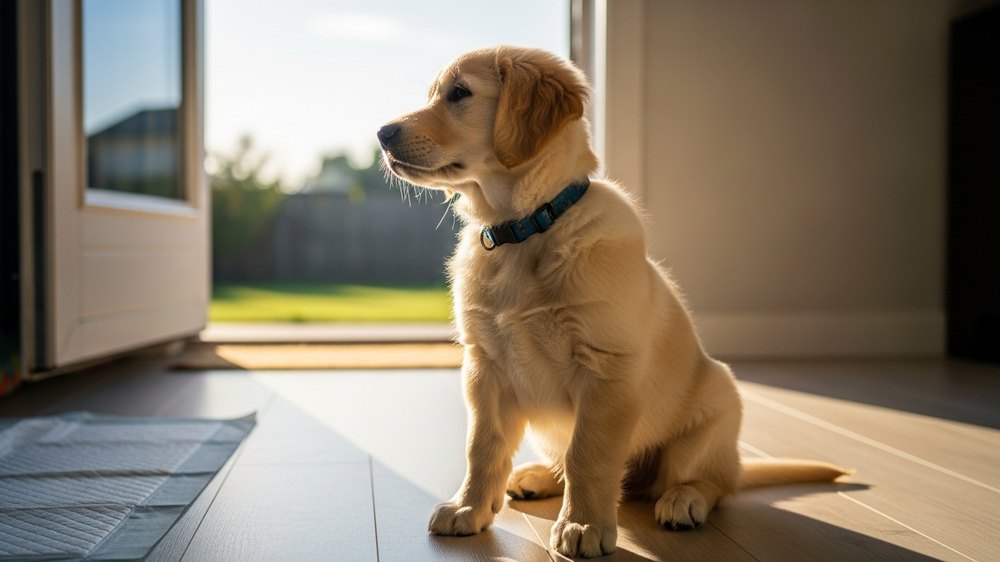
Let's be honest. No one buys a puppy thinking about how many times they'll be cleaning pee off the floor at 6am. And yet, here you are. Welcome to house training, the unglamorous, totally survivable rite of passage every puppy owner goes through.
The good news? Potty training a puppy isn't complicated. It's just repetitive. Get the system right, stay consistent, and most puppies crack it faster than you'd expect. This guide covers everything a first-time puppy owner actually needs: the schedule, the setup, what to do when accidents happen, and how to make it work if you live in an apartment with no backyard in sight.
No guilt trips. No miracle methods. Just a plan that works.
The Rule Every New Owner Needs to Know
Age in months equals hours they can hold it. A 2-month-old puppy can hold their bladder for roughly 2 hours. A 3-month-old, about 3 hours. Cap it at around 4 to 5 hours for puppies under 6 months, even if the math suggests otherwise. Overnight is a little more forgiving because movement and activity are lower, but don't push your luck in the early weeks.
This one rule reframes everything. Your puppy isn't having accidents because they're naughty. They're having accidents because you've gone 4 hours without a trip outside and they're 10 weeks old. Adjust your expectations, then build your schedule around reality.
Building the Potty Schedule
Puppies need to go out at predictable moments every single day. The big ones are:
- First thing in the morning, before anything else
- After every meal
- After naps
- After play sessions
- Before bed
- Any time they've been confined and are let out
Feed on a fixed schedule too. Meals in, meals out. A puppy that eats at random times is harder to predict. Two to three meals a day at consistent times gives you far more control over when they'll need to go.
Write it down if that helps. A simple potty log, with the time out, the result, and any accidents noted, shows you patterns fast and helps you spot if something's off.
Setting Up for Success: Crate and Confinement
A crate isn't a punishment. Used correctly, it's the single most effective house training tool you have. Dogs instinctively avoid soiling where they sleep, so a correctly sized crate gives your puppy a reason to hold it.
The crate should be just big enough for your puppy to stand up, turn around, and lie down. Too big and they'll use one end as a bathroom. If your crate came with a divider, use it.
Confinement doesn't have to mean the crate full-time. A puppy-proofed pen or a single room with a baby gate works well when you can't actively supervise. The point is simple: an unsupervised puppy with full run of the house equals accidents you won't find until later.
Related: Crate Training 101 and The First 30 Days With a New Puppy.
Signs Your Puppy Needs to Go
Catching them before they go is always better than cleaning up after. Watch for:
- Sniffing the ground with intent
- Circling or pacing
- Sudden stillness after activity
- Heading toward a corner or out of your line of sight
- Whining or scratching at the door
When you see any of these, move. Calmly and quickly. You want to get them to the right spot, not start a chase.
When You Catch Them in the Act
A firm, calm "outside" or "ah-ah" is enough to interrupt them. Pick them up mid-squat if you can, take them straight to the designated spot, and wait. If they finish there, that's a win. Treat and praise immediately. The reward has to happen right after they go, not when you get back inside.
If you find evidence after the fact, there is genuinely nothing useful you can do except clean it up. Puppies don't connect a telling-off to something that happened five minutes ago. Rubbing their nose in it achieves nothing except making your dog distrust you. Let it go, clean it properly, and get back on schedule.
Cleaning Accidents Properly (This Part Actually Matters)
Regular household cleaners don't fully break down the proteins in pet urine. If your puppy can still smell where they went, that spot is essentially labeled "toilet" in their mind. Use an enzymatic cleaner. It breaks down the odor at the source rather than masking it.
Blot up as much as possible first, then apply the cleaner and let it work. Don't scrub it in. Don't use ammonia-based products, because ammonia smells like urine to a dog and you'll make the problem worse.
Apartment and No-Yard House Training
No yard doesn't mean no chance. It means more planning. Decide on your designated toilet spot before you bring your puppy home, whether that's a specific patch of grass nearby, a balcony with a grass pad, or a puppy pad as a transitional tool. The key is consistency: same spot, same cue, same reward.
If you're using puppy pads as a step toward outdoor toileting, place them by the door first, then gradually move them outside over time. Pads can be a useful bridge but aren't always a permanent solution for every dog. Some become very attached to the texture and you'll need to wean them off.
Elevator and stairwell trips count as part of your timing too. If you live on the fifth floor, factor in the travel time and take your puppy out before they're desperate, not when they're already circling.
Handling Regression
Potty training rarely goes in a straight line. A puppy who was doing brilliantly at 12 weeks can start having accidents again at 5 months. Common causes include:
- A change in routine or environment
- A new person or animal in the home
- Moving to a new place
- Illness, especially a urinary tract infection
- An adolescent phase, typically between 6 and 12 months
If regression comes with other symptoms like increased frequency, straining, or blood in the urine, get a vet check. Otherwise, go back to basics: tighter supervision, more frequent trips out, and consistent reinforcement. You're not starting from scratch. You're just reminding them of what they already know.
Common Mistakes Worth Avoiding
- Giving too much freedom too soon, instead of earning it gradually as reliability builds
- Inconsistent schedules, where feeding and toileting at random times makes patterns impossible
- Using punishment for accidents, which damages trust without teaching anything useful
- Expecting too much too young, when a 9-week-old puppy simply cannot hold it through your work meeting
- Missing the reward window, when praise and treats need to happen at the spot, straight after they go
How Long Does This Actually Take?
Most puppies are reliably house trained somewhere between 4 and 6 months with consistent effort. Smaller breeds often take a little longer. Their bladders are tiny and their signals can be subtle. Some dogs take closer to a year to be fully reliable indoors.
Consistency, patience, and realistic expectations are the whole game. You won't always get it right. Neither will your puppy. That's fine. Pick a schedule, stick to it, clean up accidents properly, and keep showing up. The mess is temporary. The well-trained dog is forever.
Apartment Puppy Potty Training Without a Yard
Apartment potty training uses the same routine as house training, but elevators, stairs, hallways, and shared dog areas add delay. Keep the leash by the crate, carry a young puppy through the building when practical, and go directly to the same approved potty spot before greetings or play.
A Simple Apartment Potty Schedule
- Immediately after waking, eating, drinking heavily, training, and energetic play
- Before entering the crate and immediately after leaving it
- Every 30 to 60 minutes while a very young puppy is awake
- Once or twice overnight at first, depending on age and individual needs
If your puppy is not fully vaccinated, ask your veterinarian about local disease risk and safer outdoor locations. Avoid heavily trafficked dog areas until your veterinarian says they are appropriate. Indoor pads or a grass tray can be temporary management tools, but use one consistent location and transition deliberately if outdoor toileting is the long-term goal.