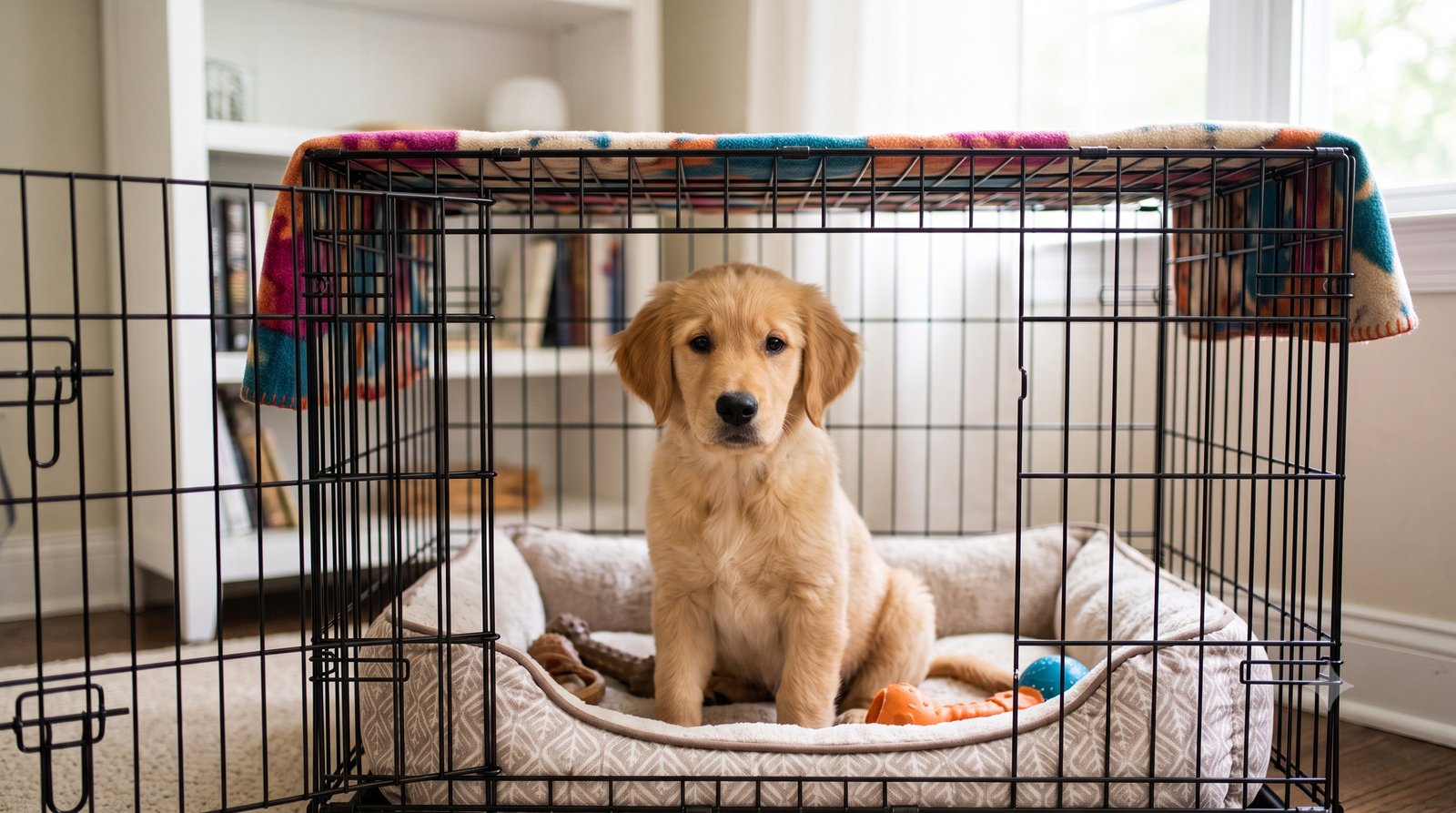
Done right, a crate becomes the one place your dog goes to exhale: a den they choose, not a cell you impose. Done wrong, it turns into a nightly battle of wills and a lot of guilt. The entire difference comes down to how you introduce it.
Why a crate works
Dogs are den animals. A snug, enclosed space is genuinely calming to them, the way a made bed behind a closed door is to us. A well-introduced crate gives your dog a predictable retreat when the house gets loud, speeds up house training (dogs instinctively avoid soiling where they sleep), keeps them safe when you cannot supervise, and makes car rides and vet stays far less frightening. The point is never to lock a dog away. It is to build a space they walk into on their own.
Pick the right crate
Size matters more than people expect. Your dog should be able to stand up, turn around, and stretch out on their side, but not have so much room that they can use one corner as a bathroom and the other as a bed. For a growing puppy, buy a crate sized for their adult weight and use a divider panel you move back as they grow, so you are not buying three crates in a year. Wire crates with a light blanket over the top mimic a den nicely; solid plastic ones travel well.
Make it the best spot in the house
Never start by shoving your dog inside and shutting the door. That first impression is hard to undo. Instead, set the crate up in a room where the family actually spends time, prop the door open, and let it become interesting. Toss treats inside for your dog to find. Feed meals in there. Drop in a comfy bed and a safe chew. For a few days, your only job is to help your dog discover that good things happen in that box, entirely at their own pace.
Build up time slowly
Once your dog trots in happily on their own, start closing the door for a few seconds while you sit right beside it, then open it and reward the calm. Stretch that to a minute, then a few, then step away and come back. A stuffed food toy or a long-lasting chew is your best friend here, because it turns crate time into a treat rather than a sentence. Go at the pace your dog can handle. Rushing this stage is the fastest way to create the exact anxiety you are trying to avoid.
Night one, and the crying question
Some fussing on the first few nights is normal, especially with a puppy who just left their litter. The skill is telling apart "I genuinely need to go out" from "I would simply prefer to be on the couch." Keeping the crate in or near your bedroom at first helps enormously, because most of the protest is about being alone, not about the crate itself. Try not to open the door the instant the noise starts, or you teach that whining is the magic button that gets them out. But do respond to a real potty signal. Over a week or two, the night protests fade as the crate becomes routine.
The hard rules
Never use the crate as punishment. If it becomes the place your dog gets banished to when they are "bad," it stops being safe, and the whole thing unravels.
Do not over-crate. A crate is a bed, not a storage unit. Puppies especially cannot hold their bladder long, roughly one hour per month of age as a rough daytime ceiling, and no dog should be crated all day and all night.
Drain the energy first. A dog with a full tank will not settle in any crate. A walk, some training, or a game before crate time makes settling almost automatic.
The bottom line
Crate training is not about confinement, it is about giving your dog a safe place of their own. Go slow, keep every association positive, build up time in small steps, and let your dog set the pace. Get that right and the crate stops being something you make your dog use, and becomes the place they choose when they simply want to rest.