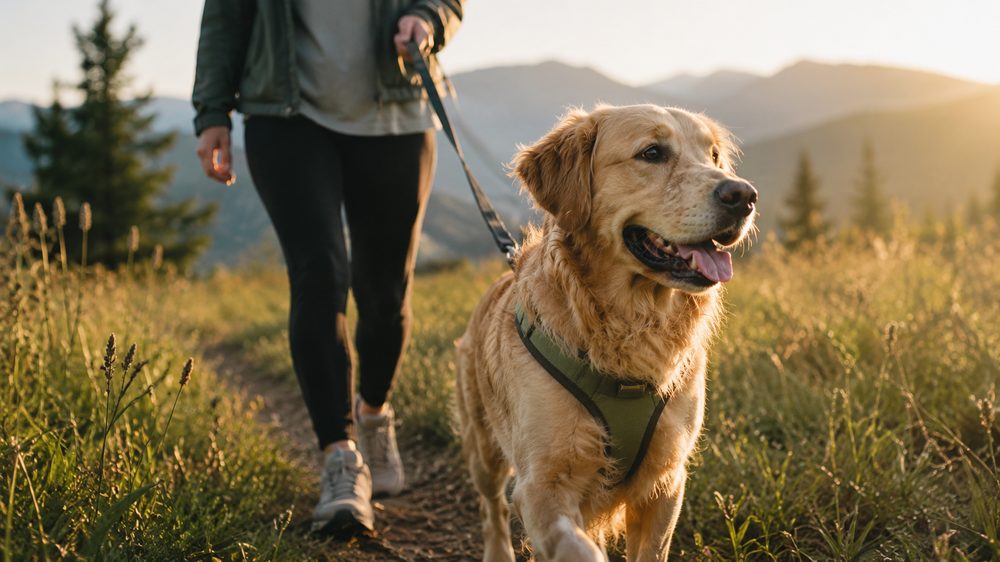
If your dog is dragging you down the street, you've probably Googled "best no-pull harness" at least once. Maybe twice. Maybe at 11pm while nursing a sore shoulder.
Here's the honest answer: some gear genuinely helps. Some gear does absolutely nothing to reduce pulling. And some gear actively makes pulling worse. Knowing the difference before you buy saves you money, frustration, and a lot of unnecessary battles on the sidewalk.
This is a gear-by-gear breakdown. No fluff, no miracle promises. Just what works, what doesn't, and why.
One thing before we start
Gear supports training. It does not replace it. No harness, head halter, or leash on the market will teach your dog that walking calmly next to you is the better option. That part still comes from consistent, positive reinforcement training. What good gear does is reduce the mechanical advantage your dog has while you do that training work. Think of it as help, not a fix.
Back-clip harnesses, and why they often make pulling worse
This one surprises a lot of people. The standard back-clip harness, the kind where the leash attaches to a ring between the shoulder blades, feels like a logical, comfortable choice. And for calm dogs, it is fine.
For dogs that pull? It's basically a sled-dog setup. When a dog leans forward and pulls, the back-clip harness distributes the pressure across the chest and shoulders in exactly the position a dog uses to generate forward power. It's the same design used in weight-pulling competitions. You're unintentionally giving your dog better traction.
Back-clip harnesses work well for small dogs with no pulling habit, dogs already trained on loose leash, and breeds prone to tracheal issues who need to avoid neck pressure. For a strong, enthusiastic puller, you'll want something different.
Front-clip harnesses, the practical workhorse
A front-clip harness has the leash attachment ring on the chest, at the front. When a dog pulls forward, the leash angle redirects them sideways or back toward you rather than letting them barrel straight ahead. They don't get the mechanical advantage. Pulling becomes less rewarding, and less effective.
This is the most widely recommended starting point for dogs that pull, and for good reason. It's simple, it's humane, and it works well for a wide range of dogs.
Popular options include the Freedom Harness, the Ruffwear Front Range, and the PetSafe Easy Walk. Each has slightly different geometry, so it's worth trying a couple if the first one doesn't sit well on your dog's build.
Fit matters a lot here. The chest strap should sit across the breastbone, not the throat. The ring should be centered on the chest. If it's riding up toward the neck or slipping to one side, you haven't got the right size or adjustment. A poorly fitted front-clip harness rubs, restricts movement, and loses most of its effectiveness.
One acclimation tip: let your dog wear the harness around the house before attaching a leash. Some dogs need a few sessions to feel comfortable with the unfamiliar pressure points.
Head halters, a stronger tool for strong dogs 🐕
A head halter fits over the muzzle and clips behind the ears, like a horse halter scaled down. The Gentle Leader and Halti are the two most common versions in the US.
Where the head goes, the body follows. That's the principle. When a dog pulls forward, the halter gently brings the nose around and redirects the whole dog. For large, very strong dogs that a front-clip harness still can't manage, a head halter can make walks genuinely manageable for the first time.
They are not muzzles. Dogs can open their mouths, pant, drink, and take treats while wearing one. That's a common misconception worth clearing up immediately.
The tradeoffs are real though. Many dogs dislike the muzzle loop at first and will paw at it or freeze up. Proper acclimation takes time, often a week or two of gradual introduction with lots of treats. Some dogs never fully adjust.
Fit is critical for safety as well as function. The nose loop should sit high on the muzzle, not close to the nostrils. The neck strap should be snug enough that you can just slide two fingers underneath. Too loose and the whole thing slides around and loses effectiveness. Too tight and it's uncomfortable.
One more practical point: never let a dog lunge to the end of a head halter lead. The sudden jerk can strain the neck. Use a shorter leash with gentle guidance rather than allowing a long run-up to a hard stop.
If you're considering a head halter, having a trainer show you the fit and intro process in person is genuinely worthwhile.
Martingale collars, a note
Martingales are limited-slip collars, most commonly used with sighthounds who can back out of standard collars. They tighten gently when a dog pulls but have a fixed limit so they can't fully close. They're not a pulling solution in the same way a front-clip harness is, but they're a safer alternative to a standard flat collar for dogs who escape their collar easily.
They're worth knowing about if you have a Greyhound, Whippet, or similar narrow-headed breed. For pulling specifically, pair one with good training rather than expecting the collar to do the work.
Retractable leashes, leave them on the shelf for this
If pulling is your problem, a retractable leash is the last thing you want. The constant tension on the line is exactly what most dogs push against. It teaches a dog that pulling is how you get more room to move. The mechanism rewards forward pressure. It is the opposite of what you're trying to achieve.
Retractable leashes also offer almost no control in a situation where you need it quickly. For loose leash training, use a standard fixed-length leash. Four to six feet is the practical sweet spot for most dogs. 🐾
Putting it together
No single piece of gear works without the human on the other end using it consistently and pairing it with training. But the right gear stops your dog from physically outmuscling you while you build that training foundation.
Start with a front-clip harness if you have a moderate puller. Move to a head halter if you need more help and are willing to put in the acclimation time. Skip the back-clip harness for any dog with a pulling habit, and retire the retractable leash entirely for walking work.
Check the fit every few weeks. Dogs change shape as they grow, gain or lose weight, or build muscle. A harness that fit well in spring might be in the wrong adjustment by fall.
The gear is there to help you both. Use it that way, stay consistent with the training side, and the walks genuinely do get better.