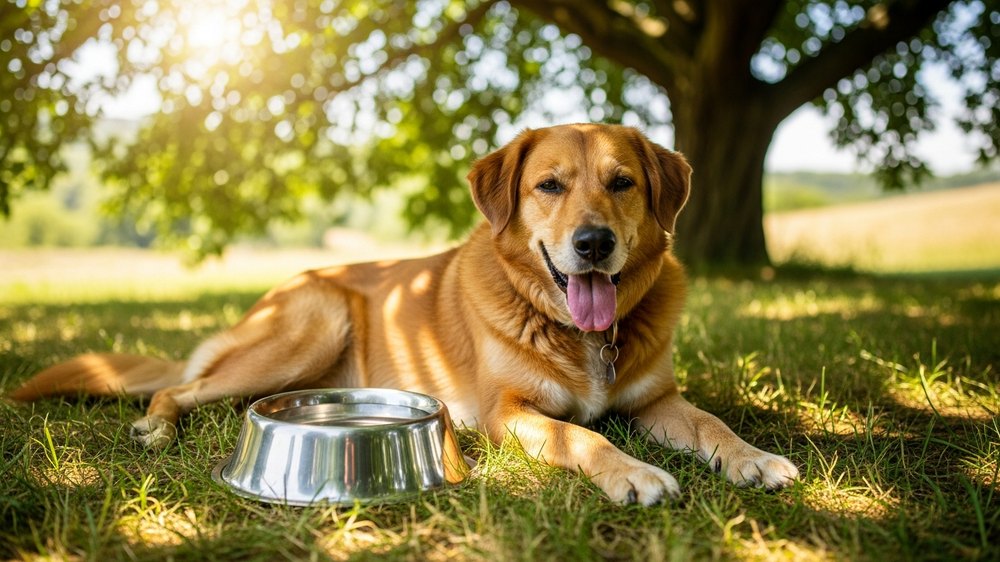
Summer is great. Long days, backyard hangs, evening walks. Your dog is here for all of it. The heat, though? That's a different story. Dogs can't sweat it out the way we do, and they can go from fine to struggling faster than most owners expect.
This is your no-nonsense guide to dog summer safety. Pavement checks, overheating signs, the best times to walk, and cooling strategies worth actually trying. Nothing scary, just practical.
The Pavement Test (And Why It Matters)
Before every warm-weather walk, press your hand flat on the pavement for about 10 seconds. If it is too hot for your hand, it is likely too hot for your dog's paws.
Asphalt absorbs and holds heat hard. On a 90-degree day, the pavement surface can sit significantly hotter than the air temperature, and dogs walk barefoot on that surface the entire time. Burned paw pads are painful, slow to heal, and easily avoided.
Grass, shaded sidewalks, and early morning routes are your best friends from late spring through the end of summer.
When to Walk (And When to Skip It)
Timing is the simplest fix. Walk early in the morning or later in the evening when the ground and air have had a chance to cool down. Midday and early afternoon are the danger zone, not just for paw burns but for overall body temperature.
A good rule: if you'd find it uncomfortable to jog outside in full sun right now, your dog definitely will. They're working harder than you to move that body, and they can't regulate heat nearly as efficiently.
Short, shaded routes beat long open ones on hot days. If your walk feels too long or your dog starts slowing down, that's your cue.
Breeds That Struggle Most in the Heat
Not all dogs handle summer the same way. A few groups need extra attention when heat is on the agenda.
- Flat-faced (brachycephalic) breeds such as Bulldogs, Pugs, French Bulldogs, Shih Tzus, and Boston Terriers. Their airways are shorter and less efficient, which makes breathing hard work in heat. They overheat fast and recover slowly.
- Thick or double-coated breeds such as Huskies, Malamutes, Chow Chows, and Saint Bernards. That coat insulates them in cold weather and traps heat in warm weather.
- Senior dogs, who have less efficient thermoregulation and may not show distress as obviously.
- Very young puppies, who aren't yet fully developed and are less able to compensate.
None of this means these dogs can't enjoy summer. It means their margins are smaller and you need to watch them more closely.
Related: Aging Gracefully: Supporting Your Senior Dog.
Early Overheating Signs vs. When to Call the Vet
Knowing the difference between "let's slow down" and "this is urgent" matters. Early signs to act on:
- Heavy, rapid panting, more than usual
- Restlessness or reluctance to keep moving
- Excessive drooling
- Slightly glassy eyes
- Seeking shade or lying down mid-walk
What to do: stop the walk, move to shade, offer cool water, get them somewhere with airflow or air conditioning, and let them rest.
Signs that need veterinary attention:
- Vomiting or diarrhea during or after being in the heat
- Stumbling, disorientation, or weakness
- Gums that look pale, bright red, or tacky
- Collapse or loss of consciousness
- Unresponsive or seizure-like behavior
If you're seeing any of those, call your vet or emergency animal hospital immediately. While you wait or travel, apply cool (not ice cold) water to their paws, neck, and inner thighs, and keep them in moving air. Do not delay getting help.
Related: 10 Signs Your Dog Is Trying to Tell You They're Sick.
Never Leave Your Dog in a Car. Not Even for a Minute.
This one is worth saying plainly. A car parked in summer sun becomes dangerous in minutes. The temperature inside can climb well beyond the outside air temperature extremely quickly, even with the windows cracked.
There is no errand fast enough to make this safe. If your dog can't come with you inside, they stay home. Full stop.
Cooling Tricks That Work
Keeping dogs cool in heat doesn't require expensive gear. Here's what actually makes a difference.
- Shade and airflow. The combination of both is what cools a dog down effectively. A shaded spot with a breeze works better than shade alone in still air.
- Fresh, cool water always available. Dogs drink more in hot weather. Refresh the bowl frequently, and carry water on walks and offer it regularly. Don't wait for them to beg.
- Wet them down. Dampening the paws, belly, and inner thighs with cool water helps. These areas are less insulated and release heat more efficiently than the back or head.
- Wading pools and hose play. A shallow wading pool in the shade lets dogs cool off on their own terms. Low effort, high reward.
- Cooling mats. These can work well indoors for dogs that like to lie flat and stay put. Not all dogs take to them immediately.
- Frozen treats. Dog-safe frozen treats and food puzzles made with plain Greek yogurt, banana, or dog-friendly broth give them something to work on while staying cool.
- Indoor rest during peak heat. Air conditioning or a fan in a cool room is sometimes the best call. Not every day needs a walk. A mental enrichment session at home beats a miserable midday plod.
What About Cooling Vests?
Cooling vests exist and some dogs do benefit from them. They work by evaporative cooling: you wet them and the evaporation draws heat away. For dogs who tolerate wearing them and are active in the heat, they can help. They're not magic, and they still need to be combined with shade, water, and smart timing.
A Quick Summer Checklist
- Early morning or evening walks only on hot days
- Pavement check before every walk
- Fresh water available at home and on the go
- Shaded rest spots set up outdoors
- Know the early signs of overheating
- Know when to call the vet
- Never leave them in a car
Summer with your dog can be genuinely great. A bit of planning goes a long way toward keeping it that way. Know your dog, watch the signs, and keep things sensible when the heat climbs. Your dog will still think you're the best person alive. They'll just think it from a shaded spot with a frozen treat.
Sources & further reading
- Summer Heat Safety Tips for DogsCornell University College of Veterinary Medicine
- What to Do in a Dog or Cat EmergencyMerck Veterinary Manual
Sources support the core health, safety, or nutrition guidance in this article. Read our editorial standards.