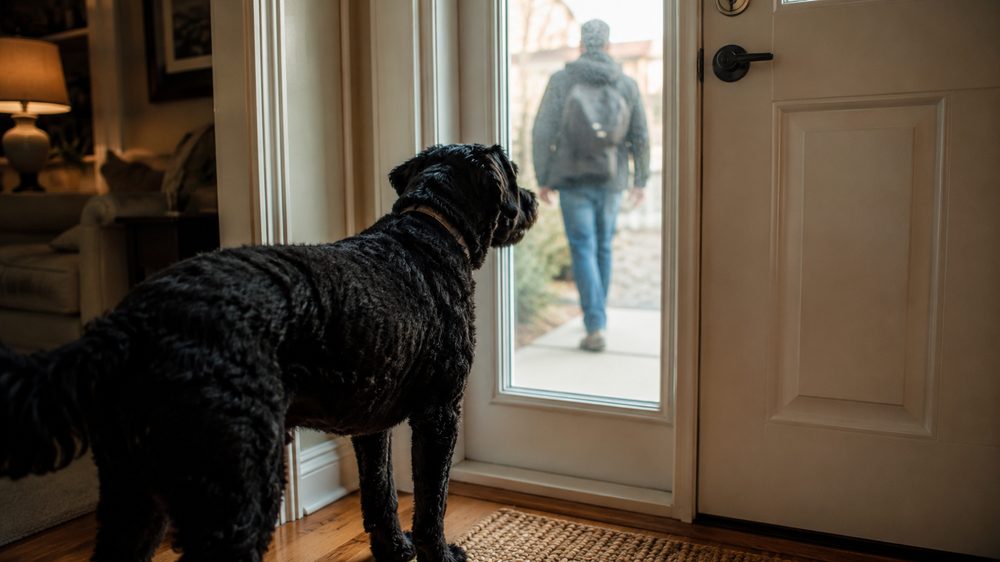
Summer is loud. Kids are home, the door slams forty times a day, someone is always on the couch, and your dog has had a solid three months of company, chaos, and dropped Popsicle sticks. Then one Tuesday in late August, everyone leaves by 8 a.m. and the house goes completely silent.
Your dog did not get a school supply list. Nobody told them this was coming.
For a lot of family dogs, that shift is genuinely disorienting. A dog who cruised through last September without a problem might struggle this year if summer was especially full, if you got a new dog since then, or if a puppy has never actually experienced a real school-year schedule. Pacing, barking, destructive chewing, and accidents in a house-trained dog are all ways dogs communicate that the change is too much, too fast.
The good news: you have a real window to do something about it before the first bell rings. Here is how to use it.
Start About Two Weeks Out
You do not need months of prep. Two weeks of intentional, gradual changes is enough to take the edge off a big schedule transition. That puts you starting around mid-August for a late August or early September first day of school.
The goal in this window is to let your dog practice being alone before they have no choice. Short, calm, low-drama alone time every day now is a lot kinder than throwing them into a six-hour stretch cold.
Start with 20 to 30 minutes of solo time behind a closed door or in their crate or designated space. Then build slowly, adding time every few days. You are not abandoning them, you are teaching them that quiet and alone are fine, and that you always come back.
Shift the Schedule Gradually, Not Overnight
If your dog has been getting walked at 10 a.m. all summer and fed at 9, moving those times to 6:30 a.m. on day one of school is a jolt. Dogs are routine animals. Their internal clocks are real, and an abrupt schedule change can spike anxiety all on its own.
Starting now, inch the morning walk earlier by 15 to 20 minutes every couple of days. Do the same with breakfast. By the time the school year starts, your dog's routine should already look like the school-year routine. No dramatic shift, no confused dog standing at the leash hook at the wrong time.
This also applies to the kids. If your children have a role in the dog's daily care, walk them through the new schedule before it starts. A dog who relies on a 12-year-old for their evening walk needs that 12-year-old to know what time that happens in September.
Build a Boring Departure Routine
This one is counterintuitive. The temptation is to make leaving into a big loving goodbye because you feel bad. Long goodbyes actually make things harder. They signal to your dog that departures are a big emotional event, which teaches them to dread the buildup.
Build a routine that is calm and identical every single day. Shoes on. Backpacks by the door. Dog gets a Kong or puzzle toy. Out the door. No fanfare, no apologies, no lingering. The sameness is the point. A predictable departure routine tells your dog, in dog terms, that this is just a normal thing that happens.
Save the big greeting for when you get home if you want it, though low-key returns help too. Let your dog settle before the excitement ramps up.
Enrichment That Actually Lasts
A lot of people grab a Kong, stuff it with kibble, and call it enrichment. Kibble falls out in four minutes. That is not going to cover a six-hour school day.
Invest some time before school starts in building a rotation of longer-lasting options.
- Frozen Kongs stuffed with peanut butter and banana or wet food take significantly longer to work through.
- Lick mats with layered, sticky food encourage slow, sustained engagement.
- Snuffle mats give a dog's nose something to do.
- Puzzle feeders at the right difficulty level can occupy a working dog for a while.
The rotation matters too. The same toy every day loses its novelty. Cycle through a few options so each one stays interesting. Introduce any new enrichment now, before school starts, so your dog is already familiar with it when they actually need it most.
Think About Midday Coverage
A lot of dogs, especially younger ones or those prone to anxiety, genuinely struggle with a full school and work day of being alone. If your household is out from 7:30 a.m. to 3:30 p.m., that is a long stretch.
Think about what midday coverage looks like for your dog this year. A dog walker who comes around noon, a trusted neighbor who can pop in, a doggy daycare on the busiest days, or even rearranging your own lunch break if you work close to home. These are practical solutions that make the day manageable rather than an endurance test.
This is also a good time to revisit crate training if your dog is crated during the day. A crate should feel like a comfortable den, not a holding cell. If your dog has complicated feelings about the crate, start working on that now.
If the Pacing Has Already Started
Maybe the kids went back last week and your dog is already showing signs of distress. Pacing, excessive barking, destruction near exits, or house soiling in a dog who normally has no accidents are all worth paying attention to.
Start the gradual alone-time practice now even if school has already started. Work on the boring departure routine. Add enrichment. Get midday coverage in place if you can.
If things are not improving after a few weeks of consistent effort, or if the behavior is severe, it is worth talking to your veterinarian. They can rule out anything medical and point you toward a certified trainer or veterinary behaviorist who specializes in this area. There is real, effective help available, and asking for it early is the smart move.
The Short Version
Dogs and back to school is a real transition, not just a people problem. Your dog spent the summer surrounded by their whole family and now the house is empty by mid-morning every day. A little prep goes a long way.
- Start alone-time practice now, 20 to 30 minutes at a time, building up.
- Move the schedule gradually, 15 to 20 minutes earlier every couple of days.
- Build a calm, consistent departure routine and skip the long goodbye.
- Stock up on enrichment that lasts longer than a coffee break, and rotate it.
- Think through midday coverage before the first week, not during it.
You know your dog. Trust that. A few intentional weeks now makes September a lot easier for everyone in the house, including the one with four legs. 🐾