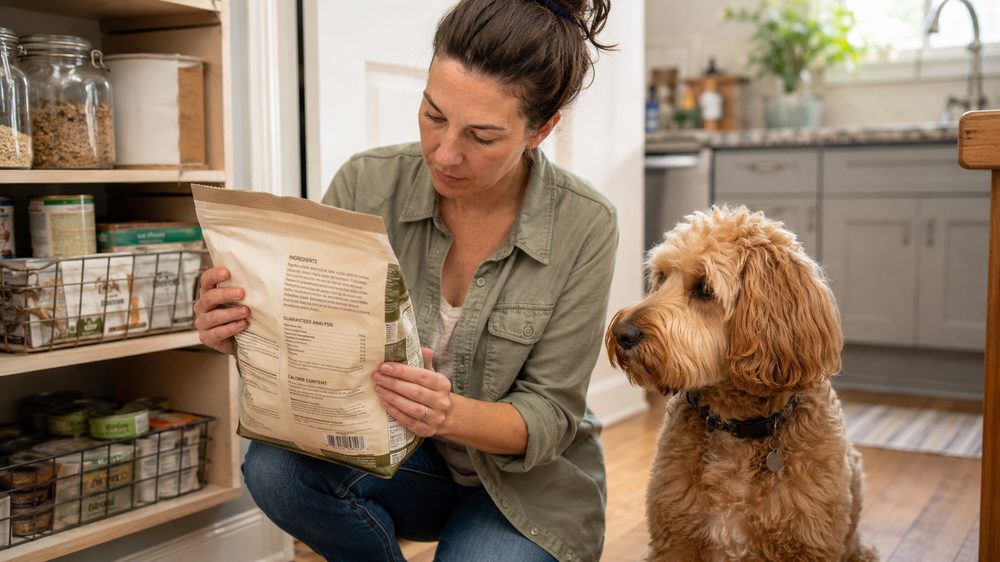
Dog food labels read like they were designed to confuse you, and honestly, some of them were. "Chicken meal," "by-products," "natural flavor" - the bag is covered in words engineered to sound wholesome while telling you very little. Here's how to actually read one.
Start with the AAFCO statement
Before you read a single ingredient, find the nutritional adequacy statement, usually in small print on the back. This is the most important sentence on the bag. It tells you whether the food is "complete and balanced" for a life stage, and how the company substantiates that claim - either by meeting AAFCO nutrient profiles or by passing a feeding trial using AAFCO procedures.
If a food doesn't carry this statement, or is labeled "for intermittent or supplemental feeding only," it's not designed to be your dog's sole diet. This one line filters out a lot of products immediately.
How the ingredient list actually works
Ingredients are listed by weight before cooking, heaviest first. That sounds helpful until you understand the catch: fresh meat is roughly 70% water, so when "chicken" tops the list, much of that weight is moisture that cooks off. A dry "chicken meal" further down the list may actually contribute more protein, because the water's already gone. Top billing isn't the slam dunk the marketing implies.
This is why "first ingredient is real meat!" is a weaker selling point than it appears. It's not bad - it's just not the whole picture.
Decoding the scary-sounding words
"Meal" (chicken meal, lamb meal). This sounds processed and lesser, but meal is simply meat and tissue with the water and fat rendered out. It's a concentrated, legitimate protein source - often a sign of a sensibly formulated food, not a red flag.
"By-products." The internet has decided these are garbage, but by-products are mostly organ meats and tissues that aren't the prime cuts humans prefer - liver, kidney, spleen. These are nutrient-dense foods that wild canines eat first. The word is unappealing; the ingredient often isn't.
"Natural flavor." Usually a small amount of digest or similar used to improve palatability. Not a concern in the quantities involved.
Named vs. unnamed sources. Here's a real distinction worth caring about: "chicken meal" (named) tells you the species. "Meat meal" or "animal fat" (unnamed) doesn't, which means less traceable sourcing. Named sources are generally a sign of a more transparent product.
The "fewer ingredients is better" myth
A short ingredient list looks clean and appealing, but it's not inherently better. A long list often just reflects the vitamins and minerals required to make a food complete and balanced - exactly what you want. Don't be spooked by a string of nutrient names you can't pronounce; those are usually the supplements doing the nutritional heavy lifting, not mysterious additives.
What the marketing words don't mean
Some of the biggest words on the front of the bag are the least regulated. "Premium," "holistic," and "human-grade" have limited or no standardized legal definition in pet food, so they tell you about the brand's marketing budget more than the food's quality. "Grain-free" became a trend, but grains aren't inherently bad for most dogs, and the FDA has investigated possible links between certain grain-free diets and heart issues - so grain-free is a choice to make with your vet, not an automatic upgrade.
A practical reading routine
Next time you're holding a bag, run this quick pass: Find the AAFCO statement and confirm it's complete and balanced for the right life stage. Check that protein sources are named. Glance at whether the formula seems built around real, identifiable ingredients. Then ignore the front-of-bag buzzwords almost entirely. That five-second routine puts you ahead of most shoppers.
The bottom line
The label is decodable once you know the trick: the AAFCO statement matters more than the ingredient panel, "weight before cooking" explains the ingredient order, and the scariest-sounding words ("meal," "by-products") are often perfectly good while the prettiest words ("premium," "holistic") mean almost nothing. Read with those filters and you'll choose based on what's actually in the bag - and if your dog has specific health needs, bring the label to your vet and decide together.
Sources & further reading
- Reading Pet Food LabelsAAFCO
- Complete and Balanced Pet FoodU.S. Food and Drug Administration
- Animal Food Labeling and Pet Food ClaimsU.S. Food and Drug Administration
Sources support the core health, safety, or nutrition guidance in this article. Read our editorial standards.